

Race against tides:
Erosion mitigation and public safety works

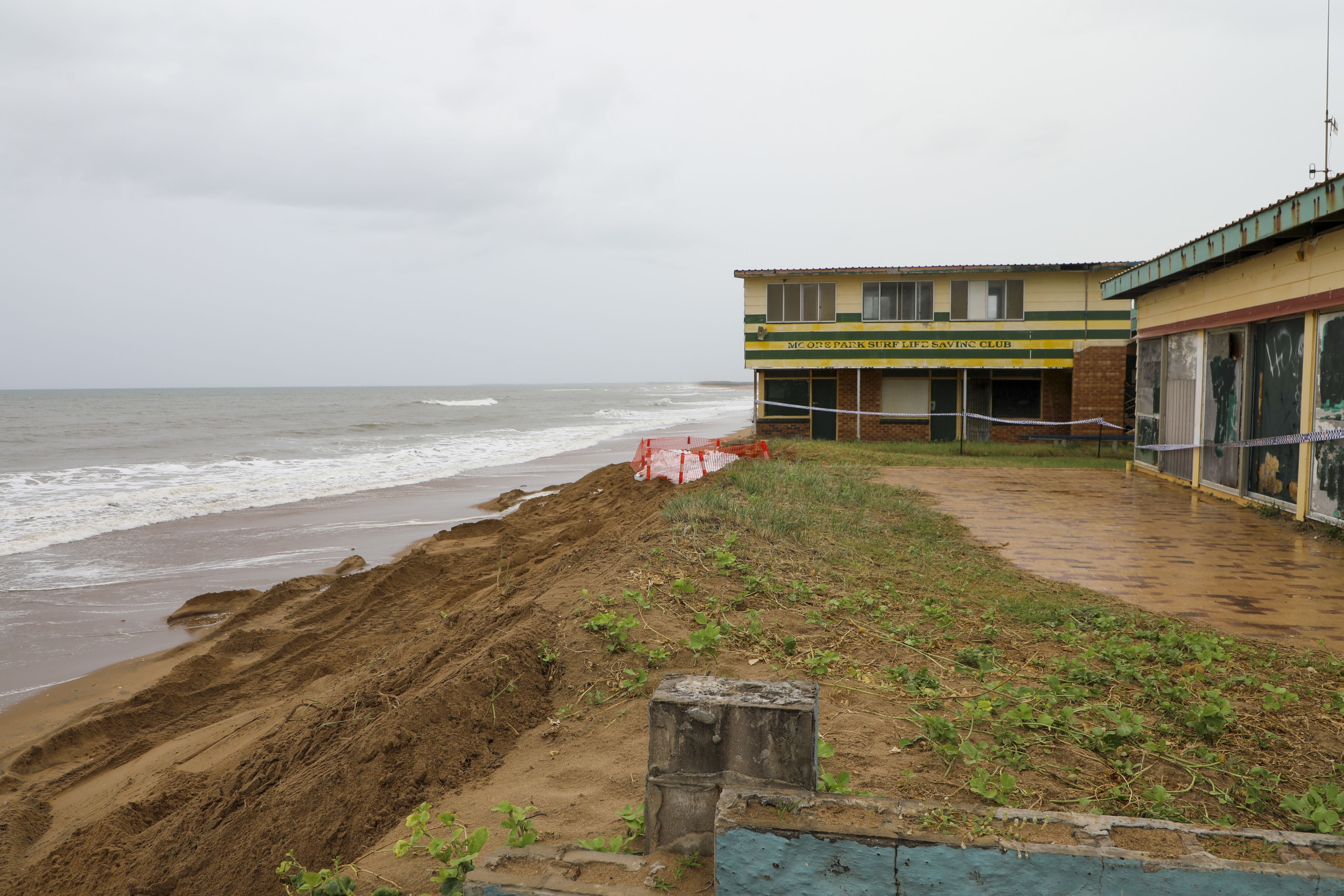
One year after ex-Tropical Cyclone Alfred battered Moore Park Beach, high tides are again wreaking havoc with survey data showing five metres of coastline has been lost in that time.
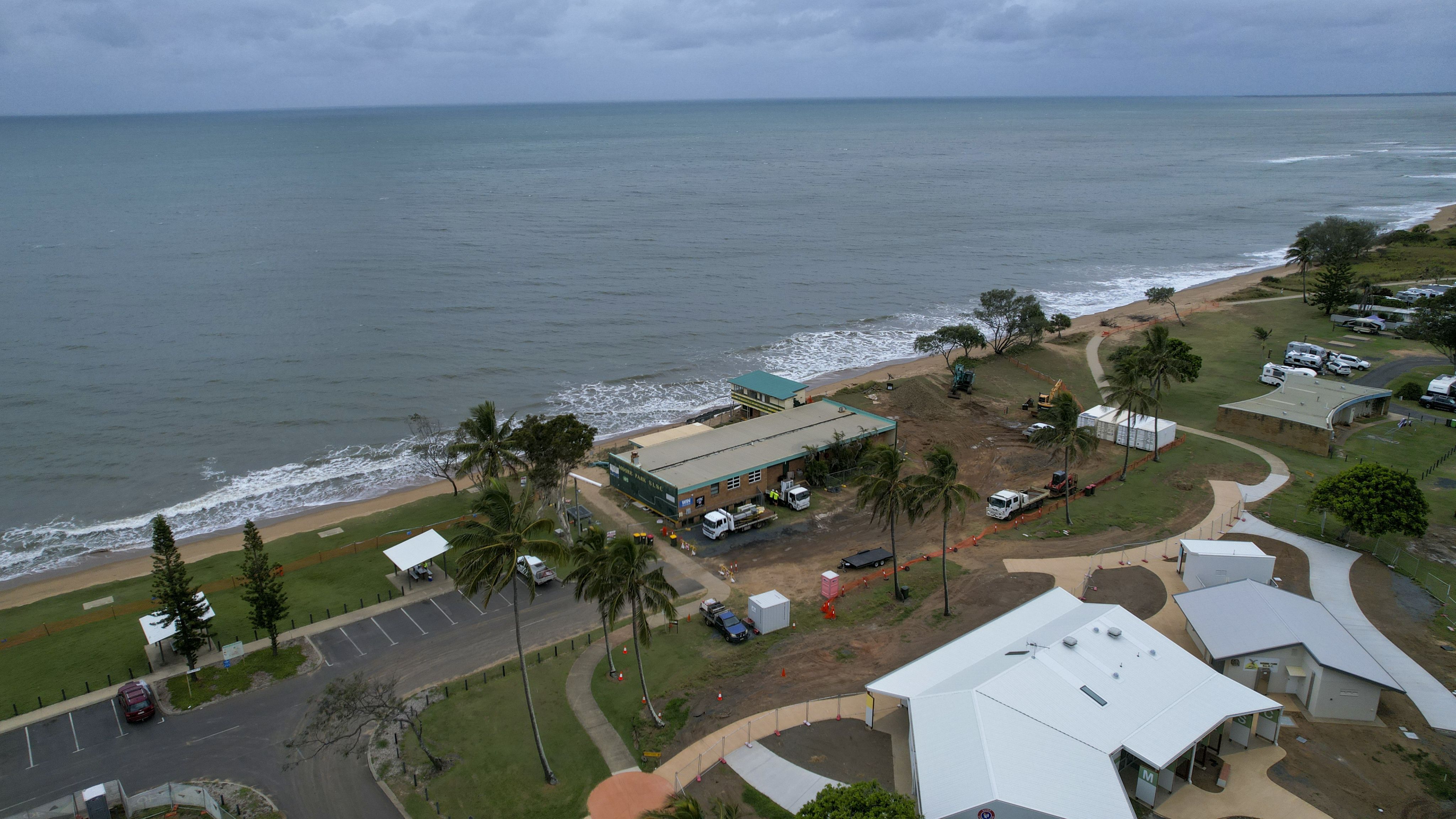
Bundaberg Regional Council took urgent action in February 2025 to partially demolish the former Moore Park Surf Life Saving (SLS) Club building which was at risk of collapsing into the beach as severe weather bore down on Queensland’s coast.
The clubhouse was a SLS Queensland asset on State Government land however the serious public safety risks necessitated swift action by Council to demolish the structure, protecting the community and the environment.
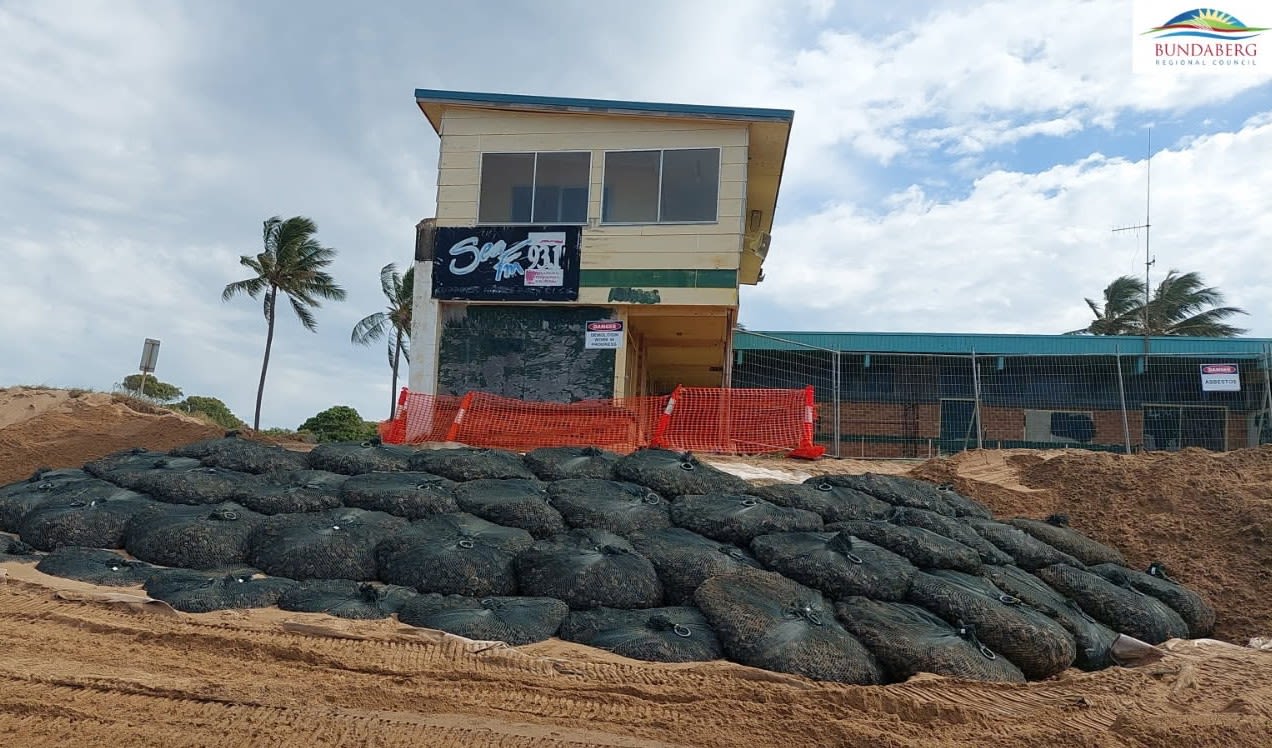
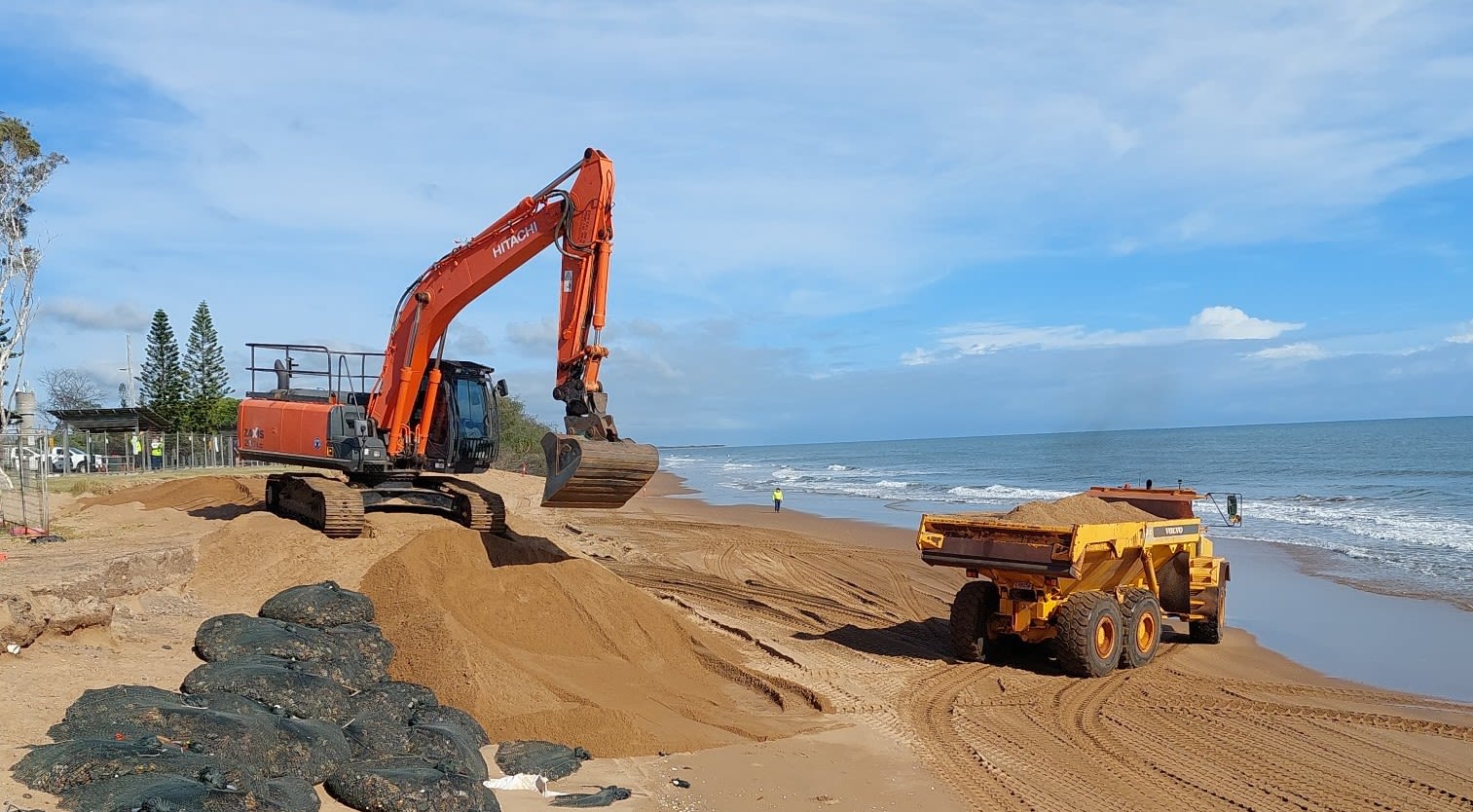
To allow the demolition works to occur safely, a temporary bag revetment was constructed.
Since that time Council has continued to investigate long-term erosion prevention solutions, lodging a proposal for an offshore breakwater with state agencies which is currently undergoing assessment.

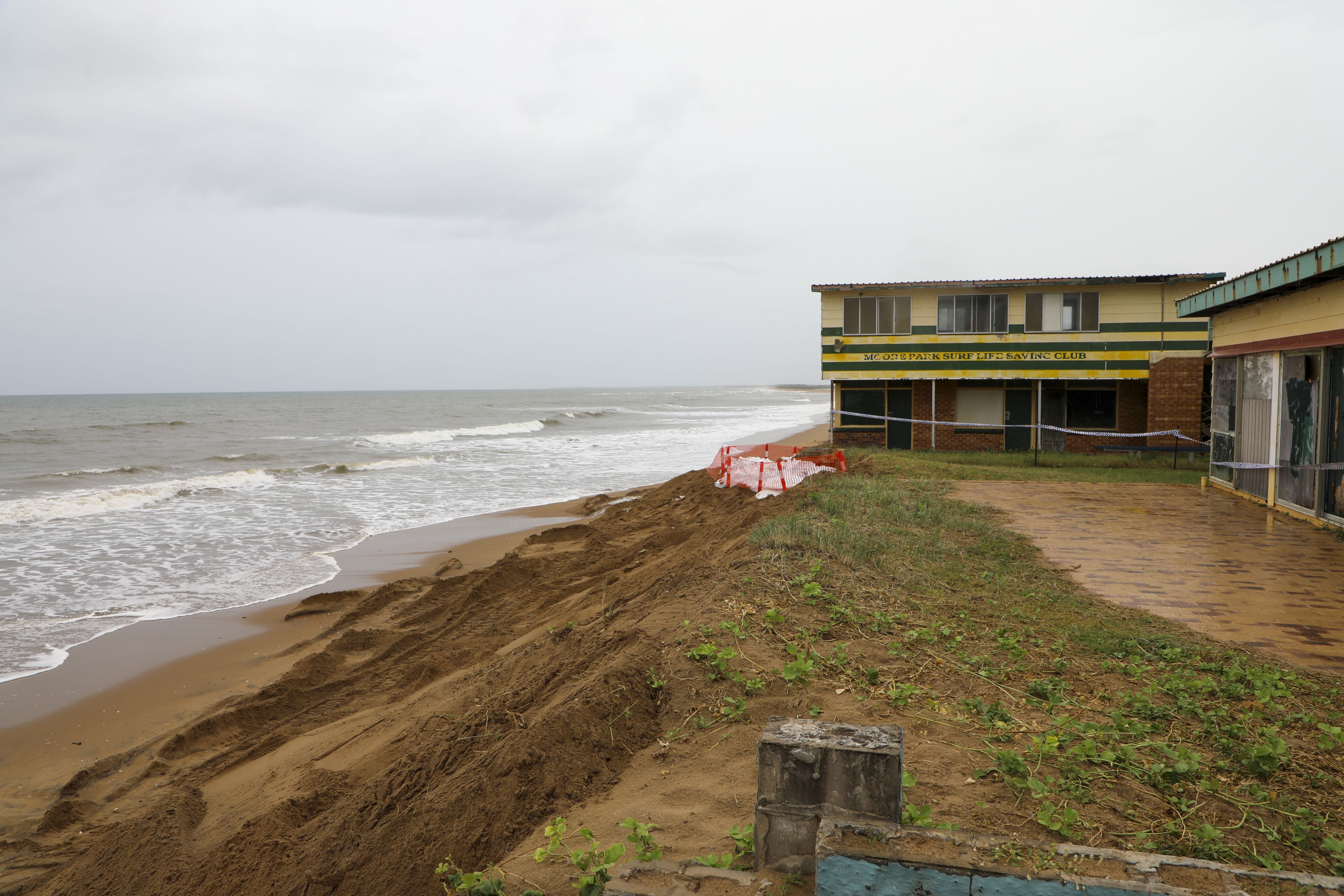

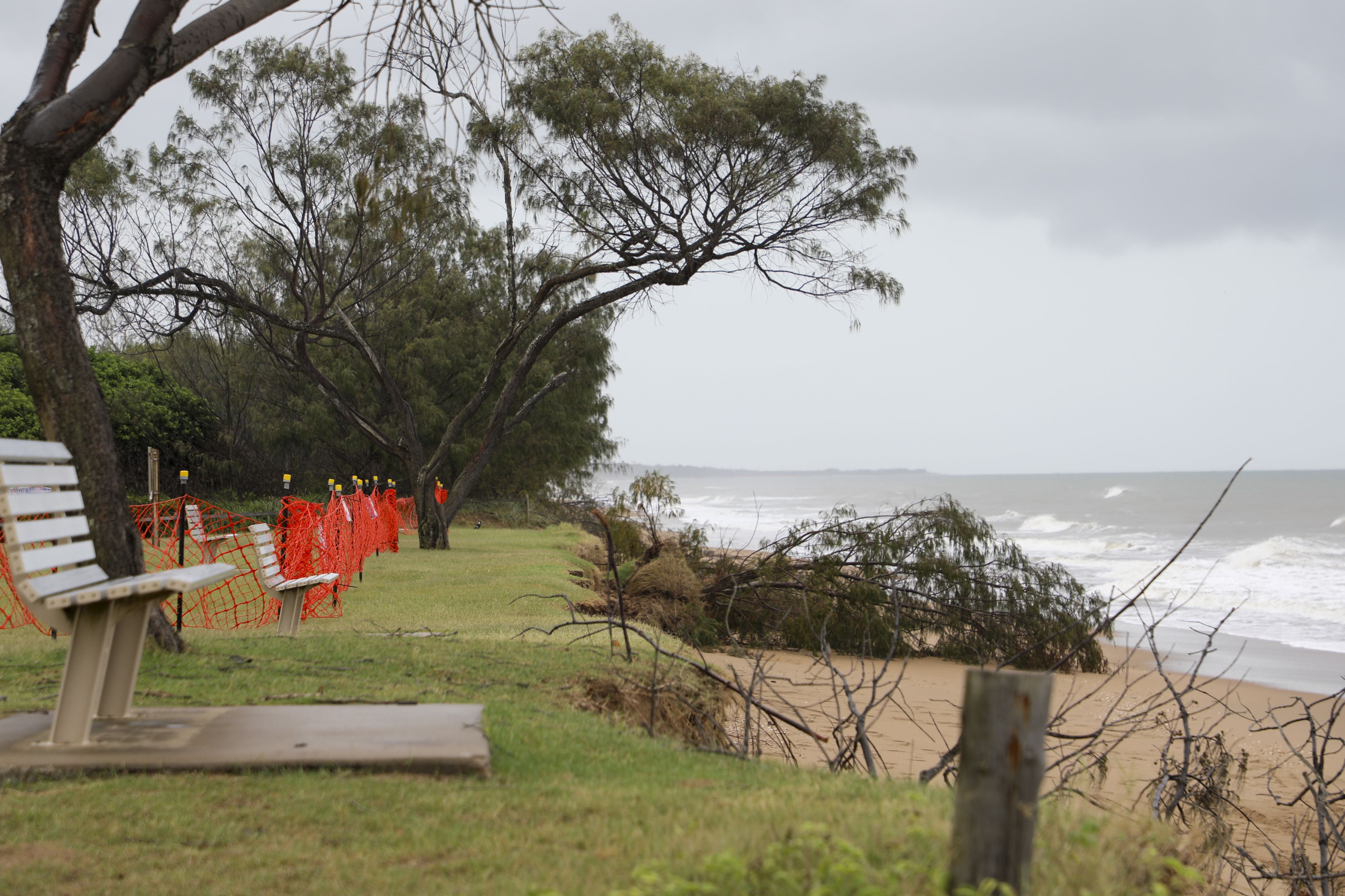
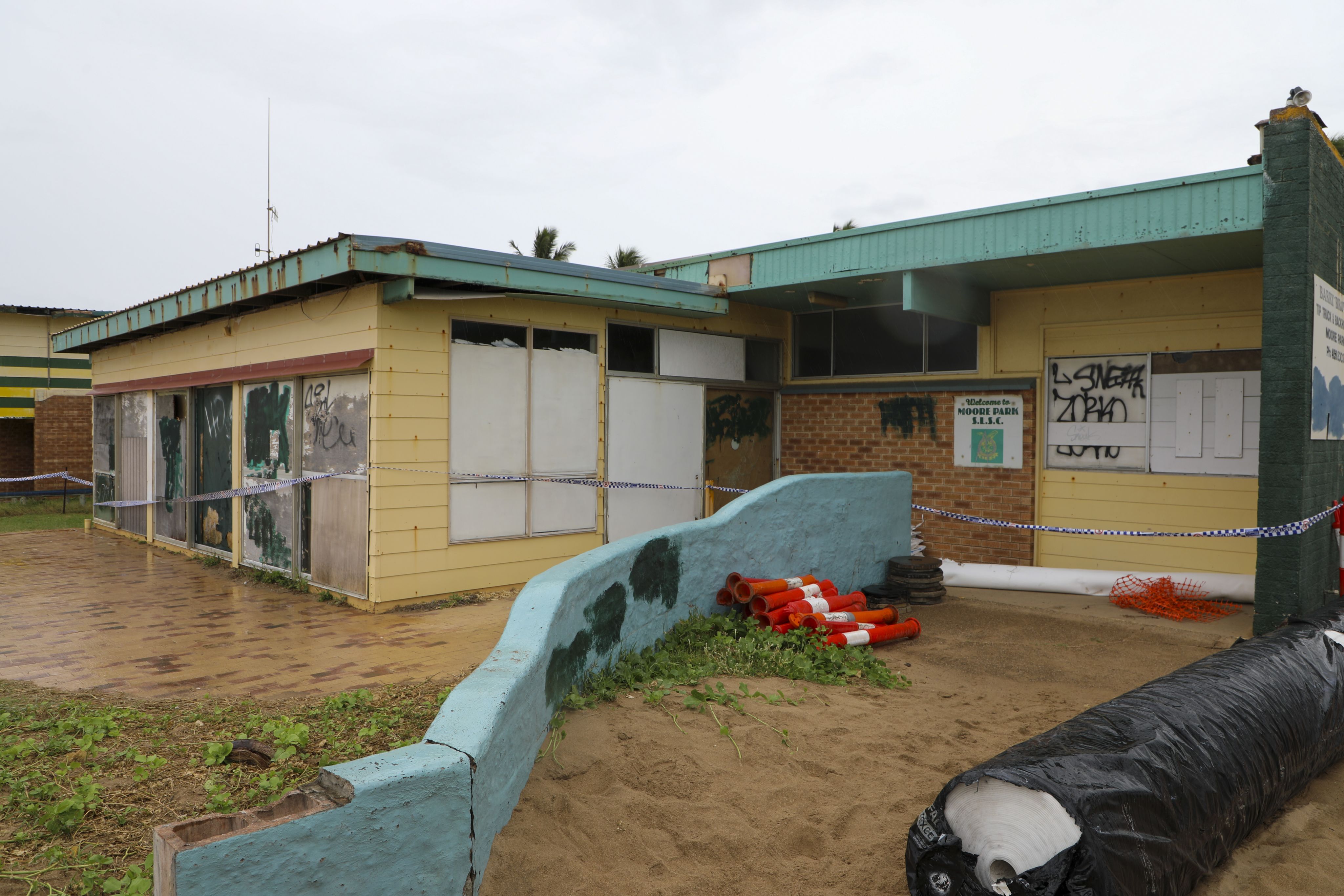
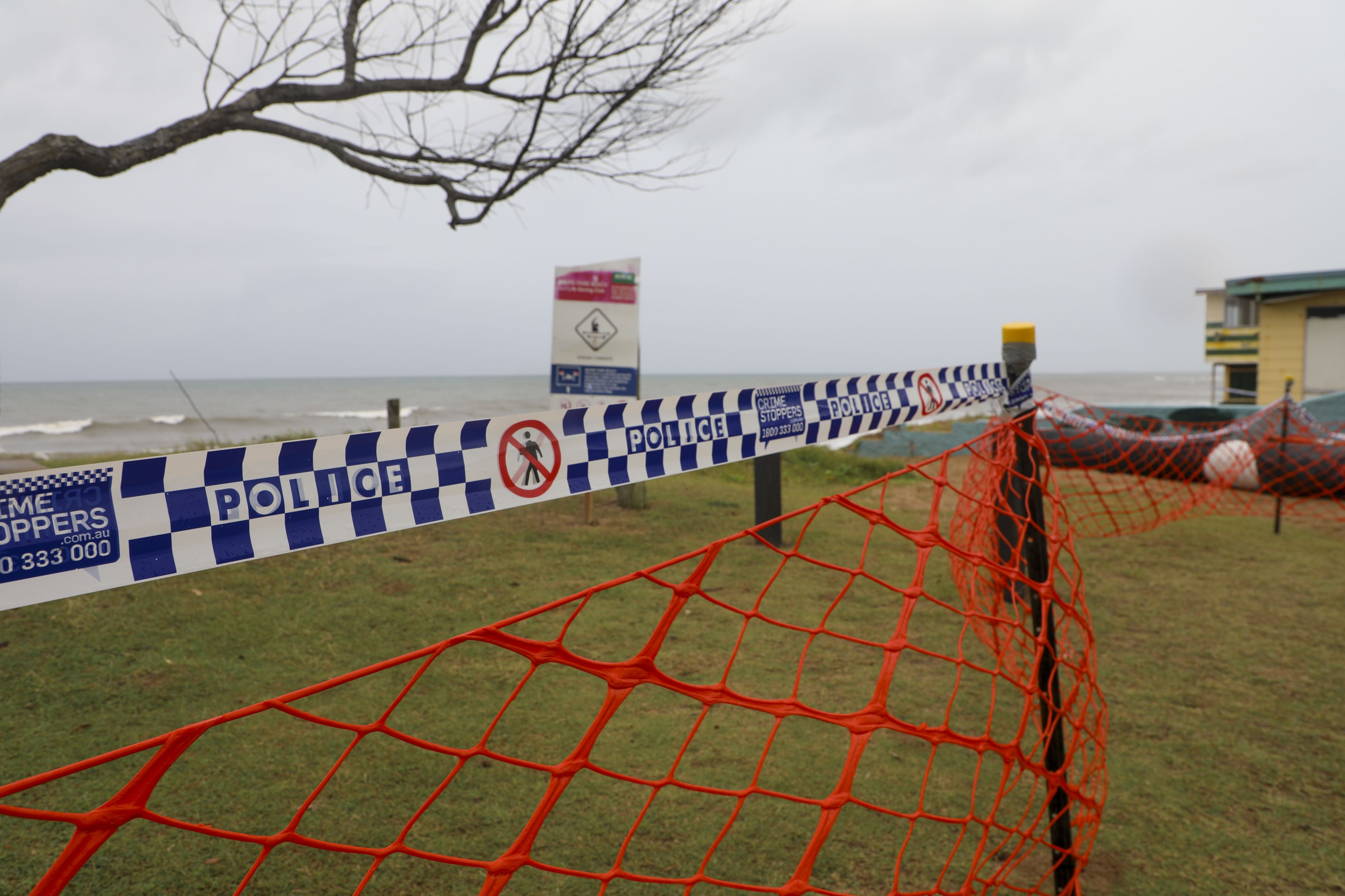
Fast forward almost 12 months from the day that ex-Tropical Cyclone Alfred impacted the Moore Park Beach coastline to Monday 2 February 2026 and high tides, in excess of 3 m, have further scoured the bank and exposed the former surf club’s foundations.
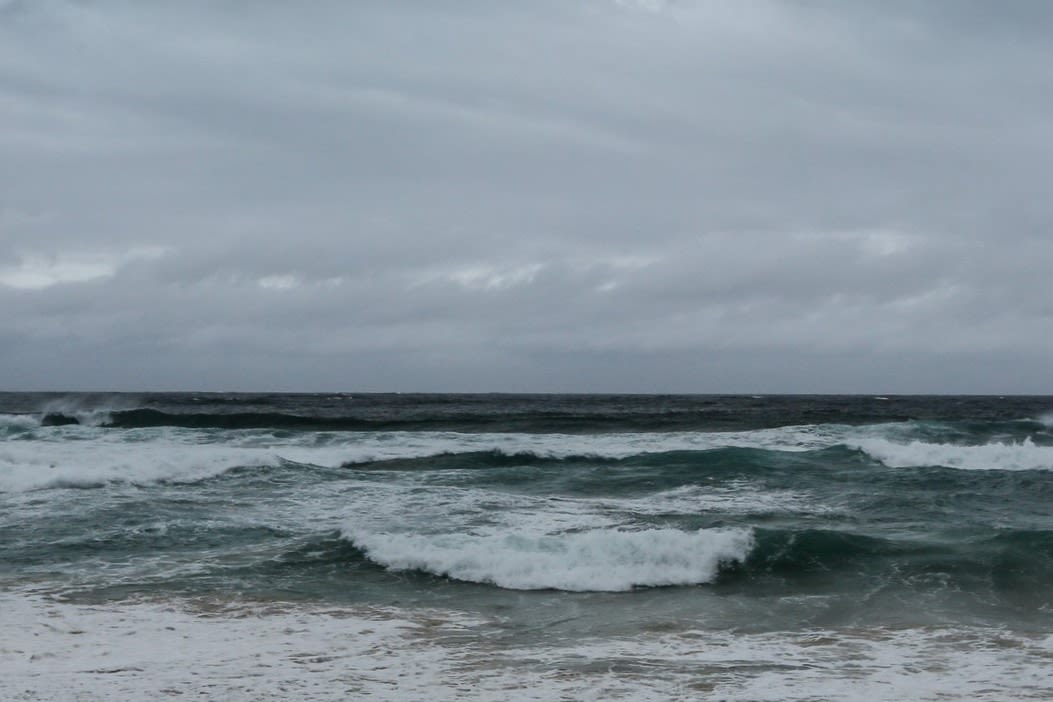
To complicate matters further, by Tuesday 17 February 2026 tides above 3 m will be combined with a sustained increase in wave energy and action which has the potential to cause significant further erosion.
This risks exposing the section of the former surf club building's foundation constructed from asbestos reinforced concrete.
Council is now taking action to address the urgent public safety implications of the latest erosion impacts while continuing to work through its long-term coastal protection solution.
The current works come after Council has invested millions of dollars into the picturesque coastal community in recent years across a variety of projects.
Efforts to demolish the former surf lifesaving club due to coastal erosion needed integration to the area's masterplan which included a community hub, sewer treatment system upgrade and new foreshore playground.
The coastline protection works is a long-term and complex project, read on for an in depth summary of the work undertaken so far and an overview of the long-term solution under investigation.

Learn more...






Where it all began

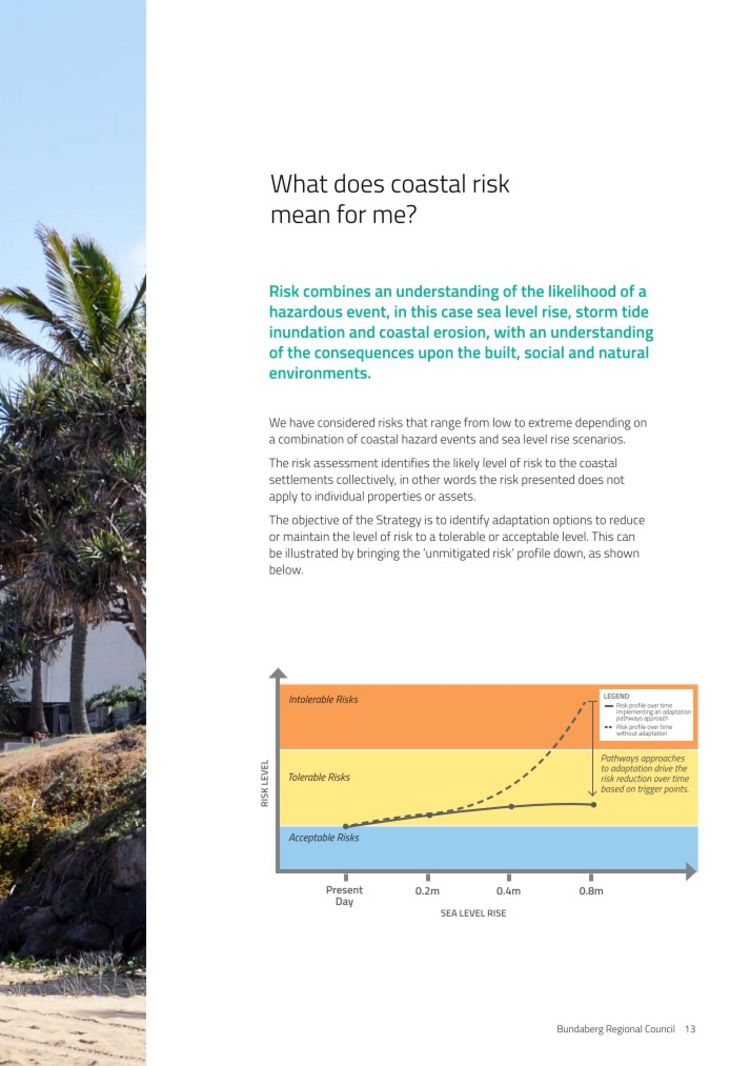
Many coastal communities face erosion and inundation risks and Bundaberg Regional Council has proactively undertaken a range of studies and investigations to ensure the region was well-placed to respond.
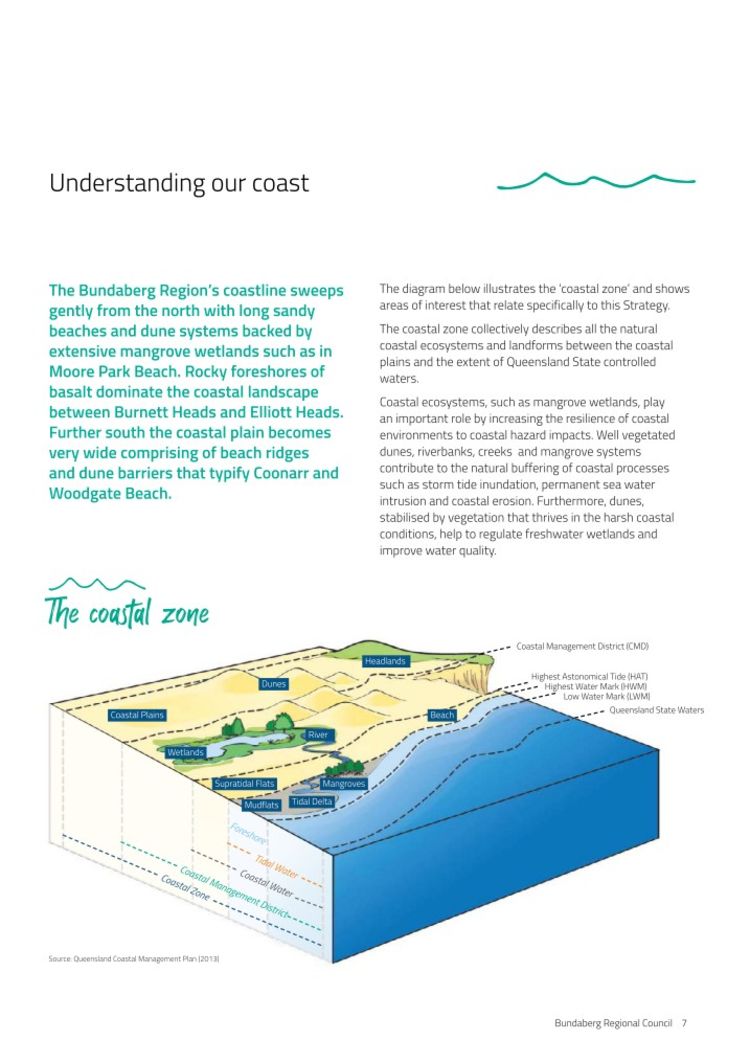
Erosion prone area mapping for the Queensland coastline has well represented the erosion risk at Moore Park Beach for many years.
This was further updated in the Bundaberg Region Coastal Hazard Adaption Strategy (CHAS) and Action Plan which was adopted in 2020.
The CHAS looks at hazards such as coastal erosion, storm tide inundation and sea level rise and identifies adaptation options to reduce risks associated with these coastal hazards.
This significant body of work identified Moore Park Beach and Woodgate Beach as priorities for adaptation responses and highlighted the varying risk types and responses needed along the entire Bundaberg Region coastline.
The Moore Park Beach coastal map and full CHAS document can be found on the Our Coast project page.
Following the development of the strategy a Shoreline Erosion Management Plan was developed for Woodgate Beach and work commenced in 2024.
Learnings from this project are now being incorporated into Council’s approach to erosion management in Moore Park Beach.



Ex-TC Alfred descends

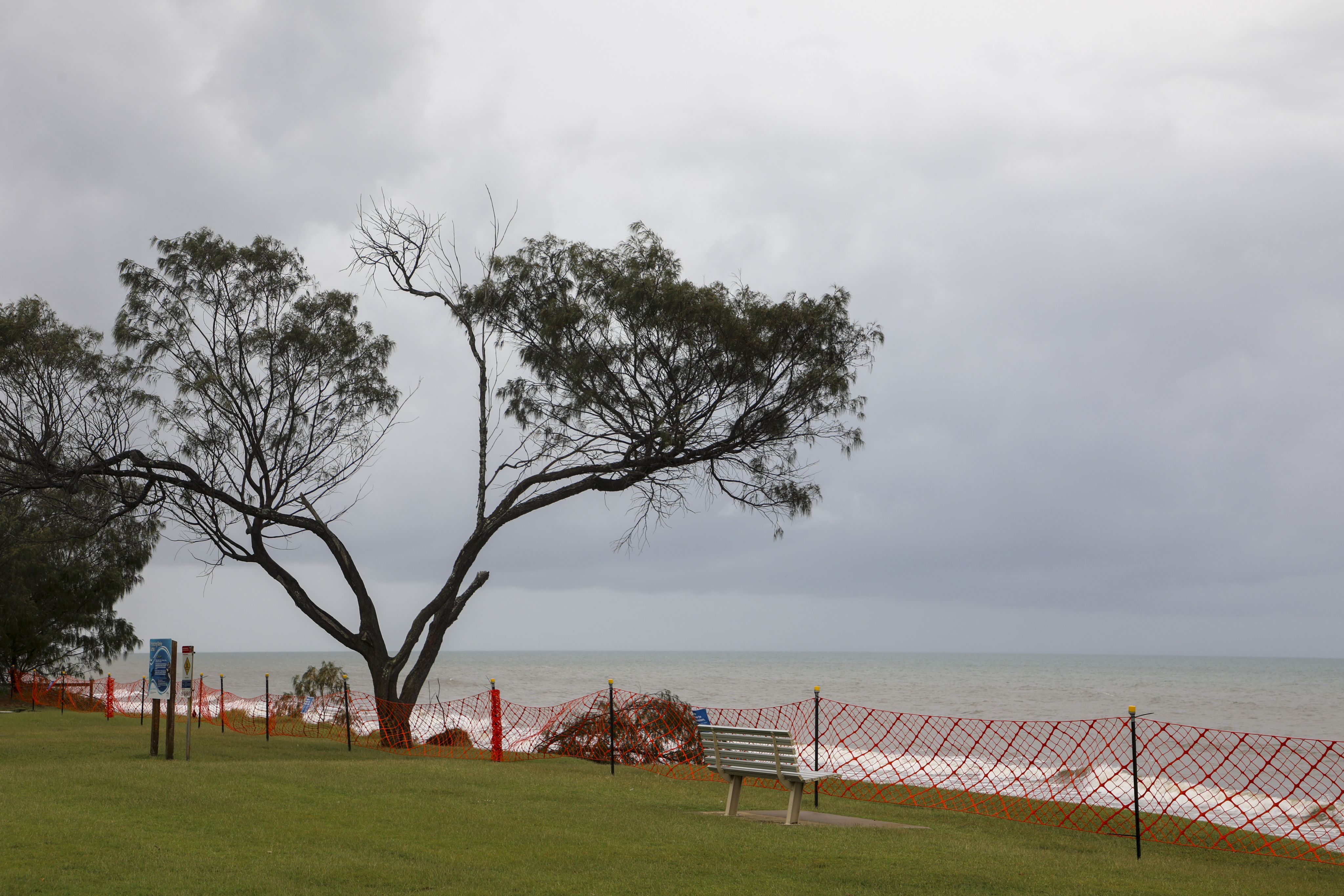
In late January 2025 severe erosion caused by king tides resulted in the immediate closure of parts of the Moore Park Beach foreshore.
Bundaberg Regional Council took urgent action in February to demolish the former Moore Park Surf Life Saving (SLS) Club building which was at risk of collapsing into the water as severe weather bore down on Queensland’s coast.
The presence of hazardous materials used in the building’s construction, including asbestos, increased safety and environmental concerns.
The clubhouse was a SLS Queensland asset on State Government land however the serious public safety risks necessitated swift action by Council to demolish the structure, protecting the community and the environment.
Council engaged a structural and coastal engineer to assess the site and a comprehensive Safety Management Plan was developed to guide the demolition of the affected building.
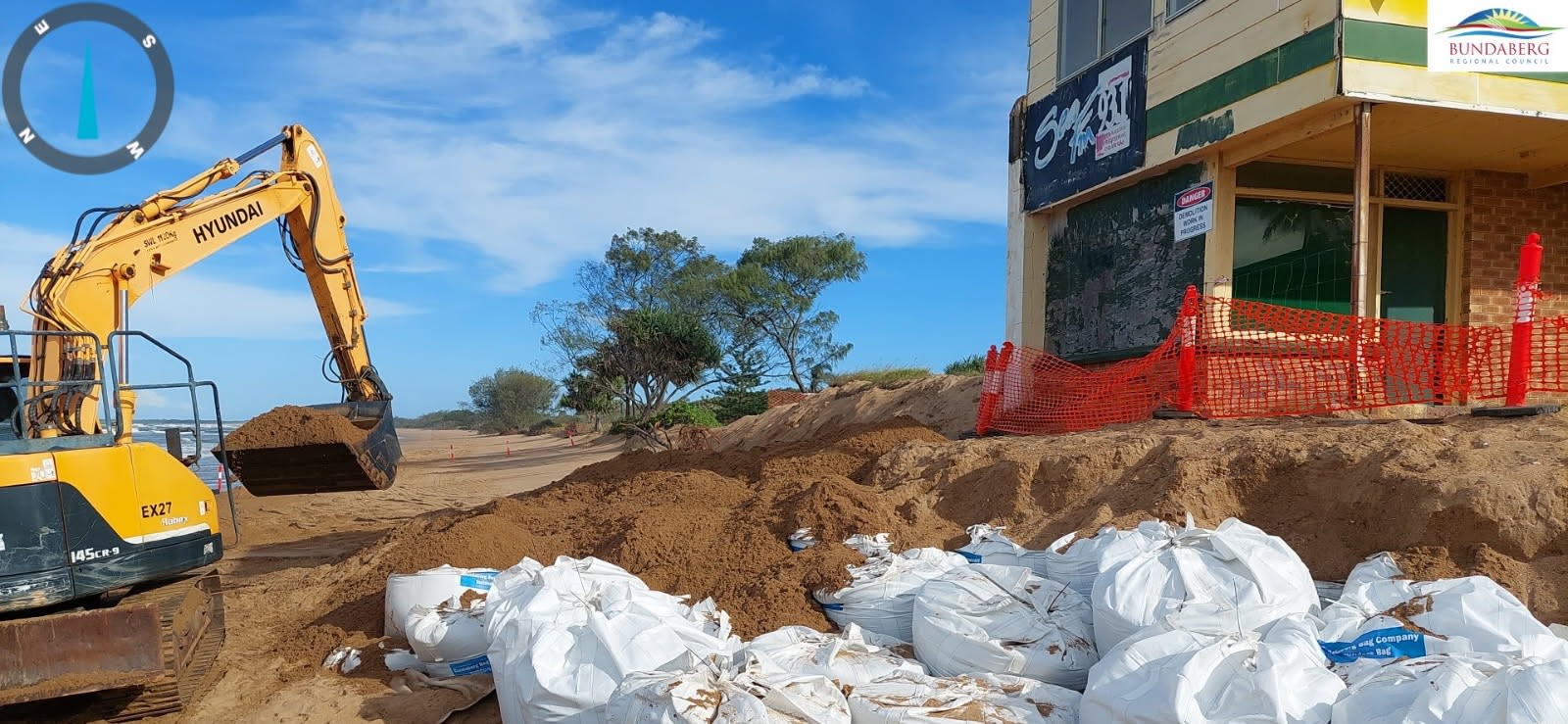
Before the demolition of the building final protective measures were put in place with hundreds of rock bags laid along the foreshore in just 13 hours.
A total of 60 one-tonne sand-filled fertiliser bags and 250 one-tonne rock bags, filled with 75mm ballast rock, were strategically placed to safeguard the area.
This was followed by sand pushing which further enhanced protection to the foreshore, ensuring the area was fortified for upcoming king tides.


Post-Alfred investigations

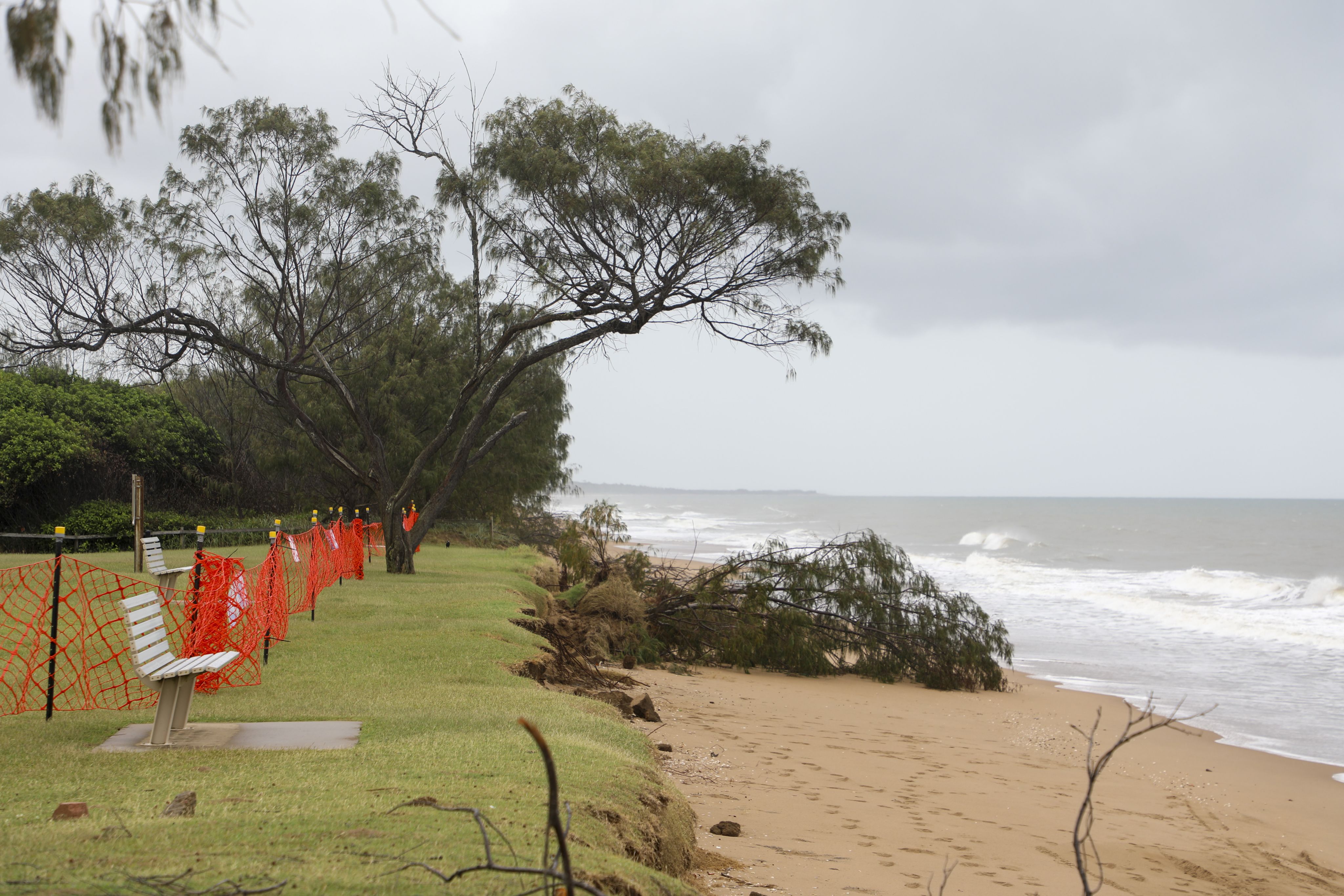
Since those initial works Council has continued to work with relevant stakeholders to see the surf club building removal finalised and progress shoreline protection plans.
The clubhouse was a SLS Queensland asset on State Government land however the serious public safety risks necessitated swift action by Council to demolish the structure, protecting the community and the environment.
Continued advocacy to the State Government recently resulted in the announcement that Council had received more than $455,000 from the State Government to finalise the safety and beautification works associated with the building.
This was a massive boost for the Bundaberg Region community to share the cost burden of the works with the state.
Council’s infrastructure and project delivery teams have also been working to finalise necessary planning and approvals for future works.
Within the last 12 months this has included rededicating the land on which the former surf club was located.
Because the lot is owned by the State Government this was a necessary step to authorise the works needed to achieve Council’s vision for the area.
The teams have been planning a longer-term solution to replace the temporary rock bag revetment.
This has included lodging development applications.
Current erosion works

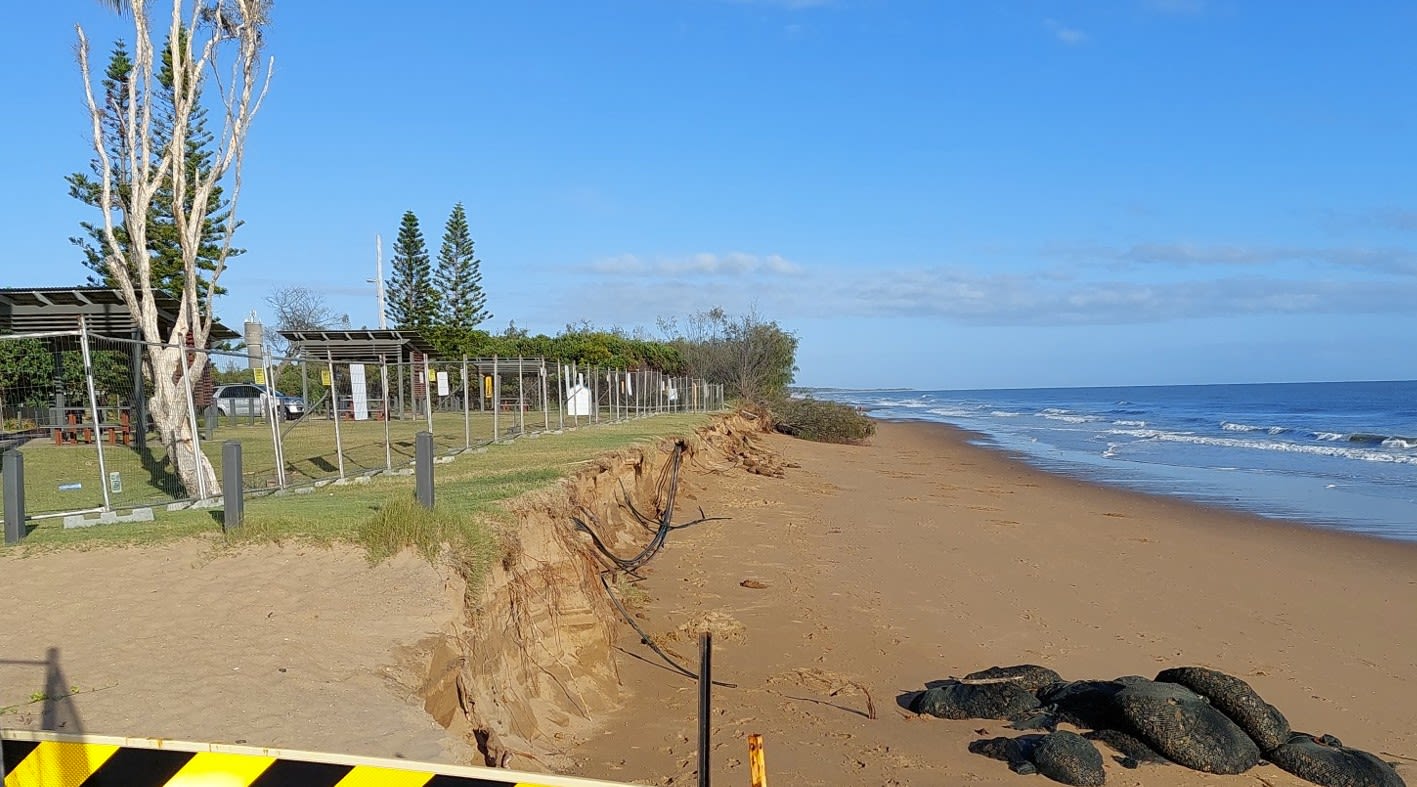
On Monday 2 February 2026 high tides one again impacted the Moore Park Beach coastline, further scouring the bank and exposing the former surf club’s foundations.
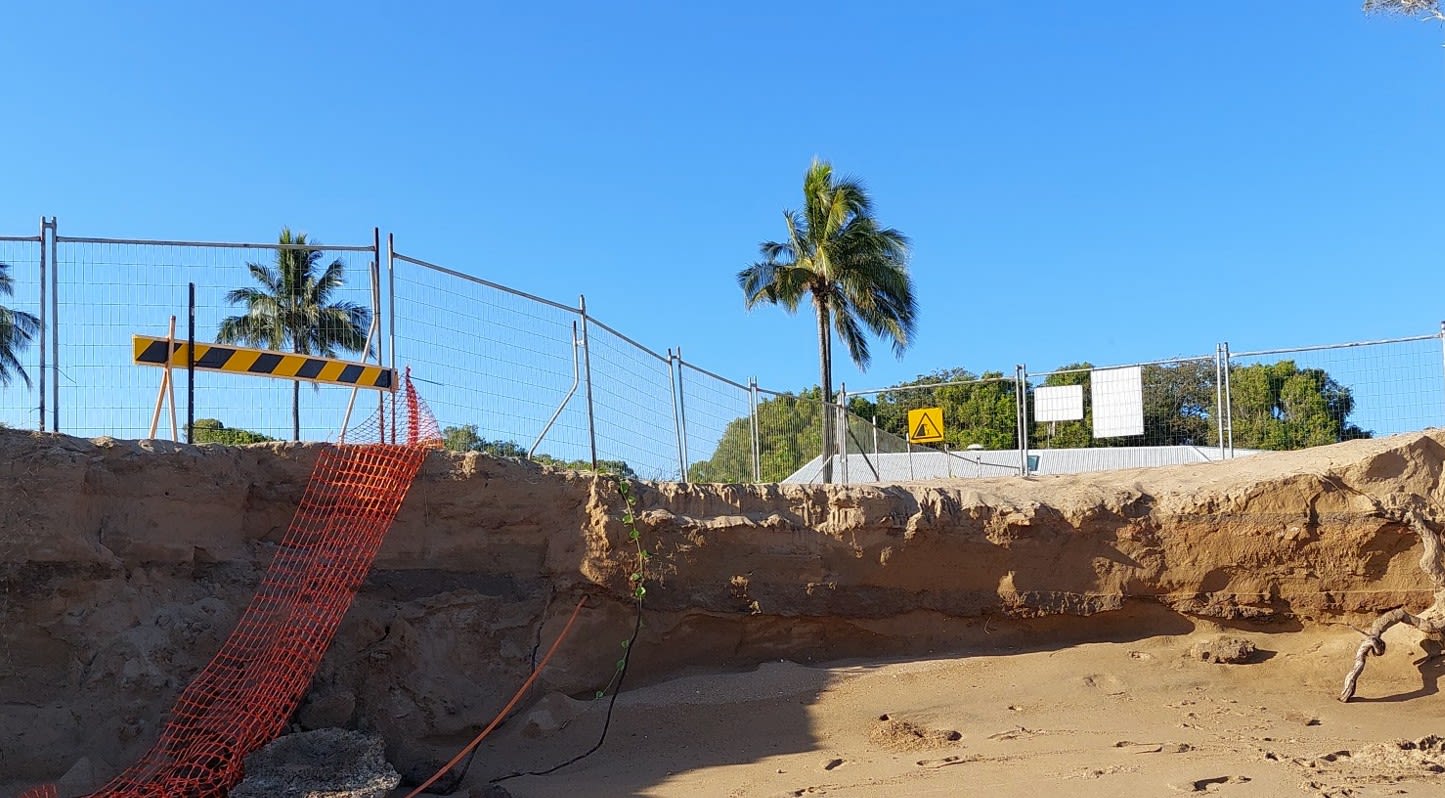
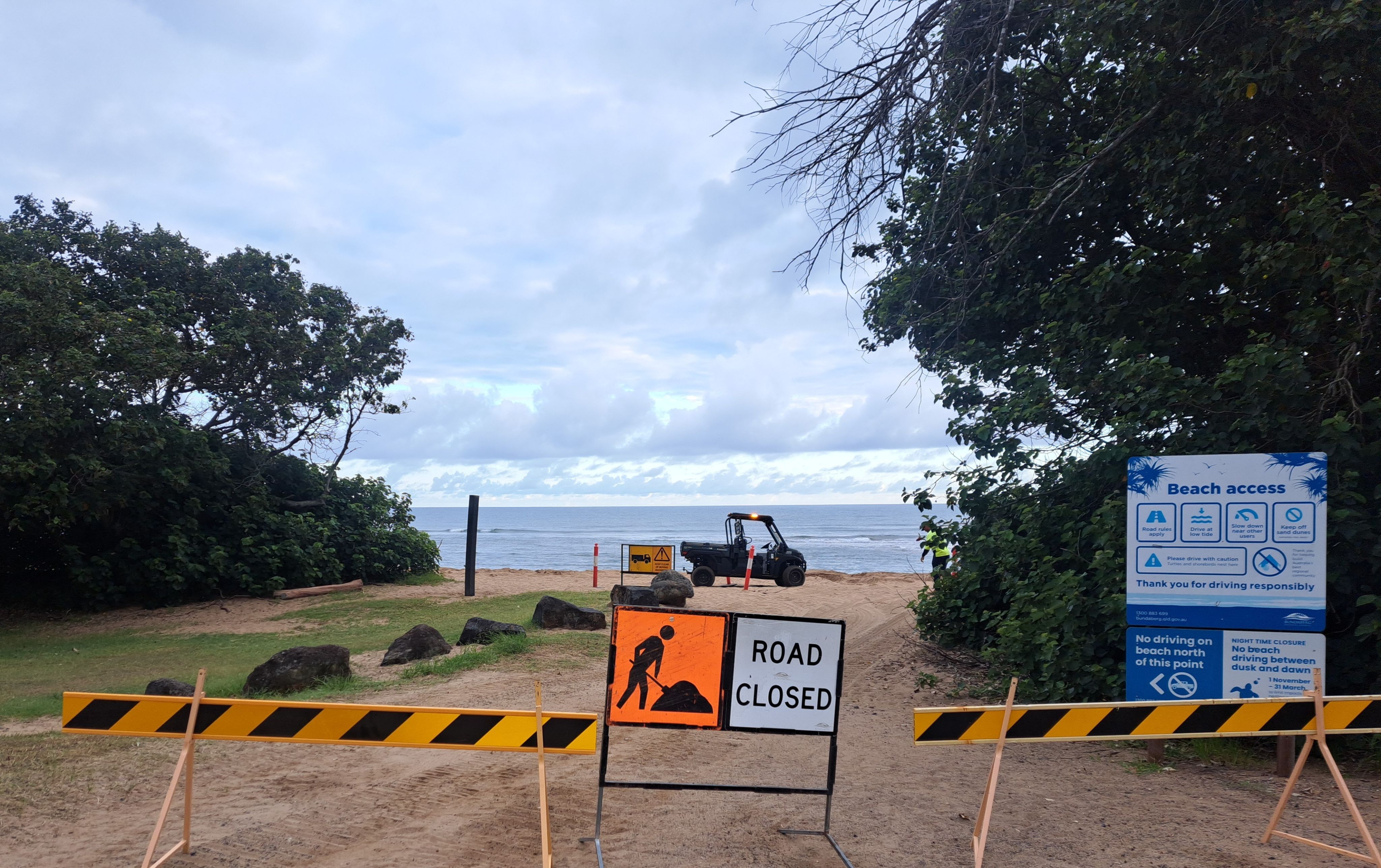
The result was an eroded section of foreshore with over a 2 m scarp, which prompted Council to immediately move to close sections of the beach and begin remedial works.
To complicate matters further, by Tuesday 17 February 2026 tides above 3 m will be combined with a sustained increase in wave energy and action which has the potential to cause significant further erosion.
This risks exposing the section of the former surf club’s foundation constructed from asbestos reinforced concrete.
Council has lodged an operational works permit for emergency works with the State Government which has allowed work on removing the building’s foundation to begin on a shortened timeframe.
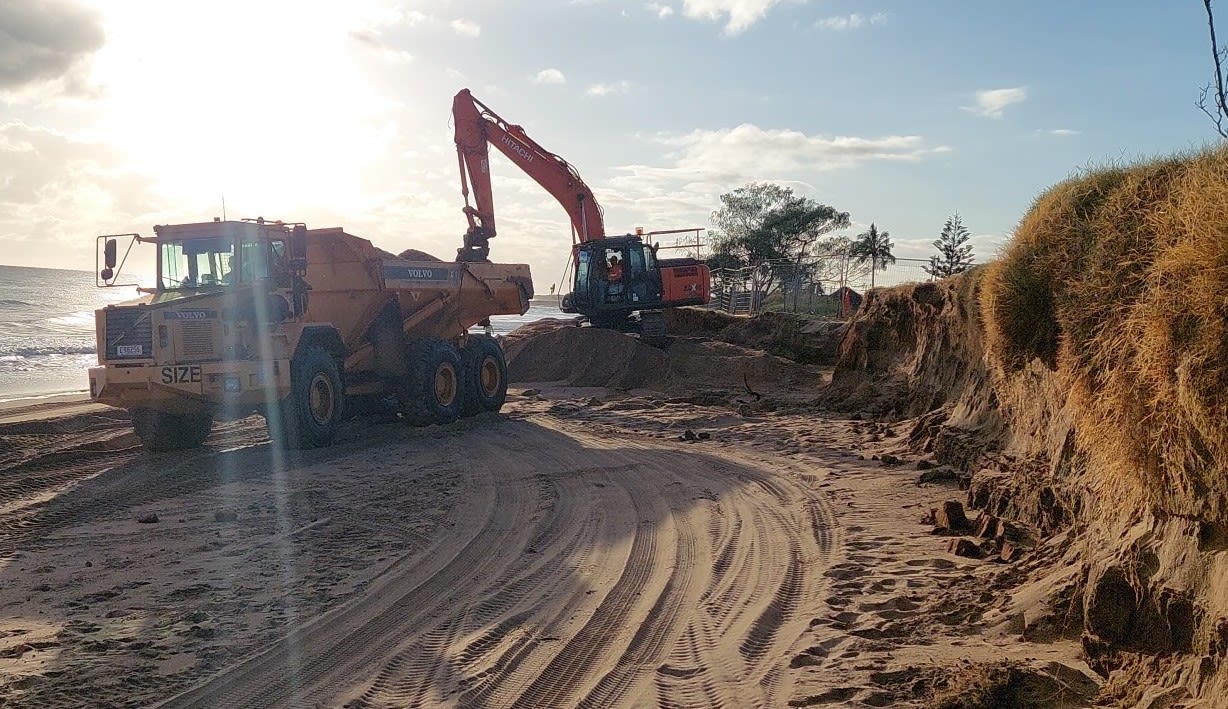
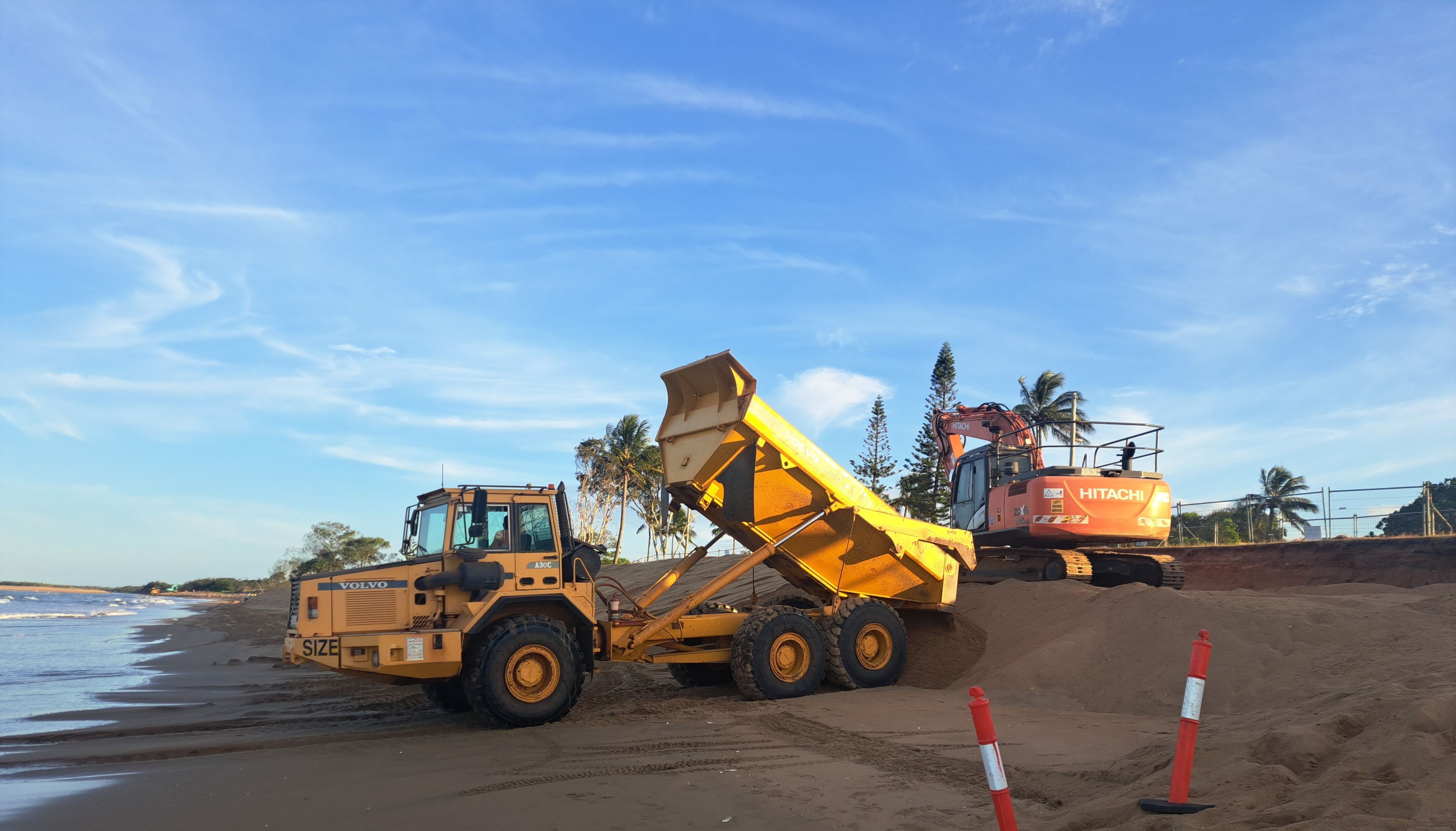
Crews are now onsite working to beat the tides.
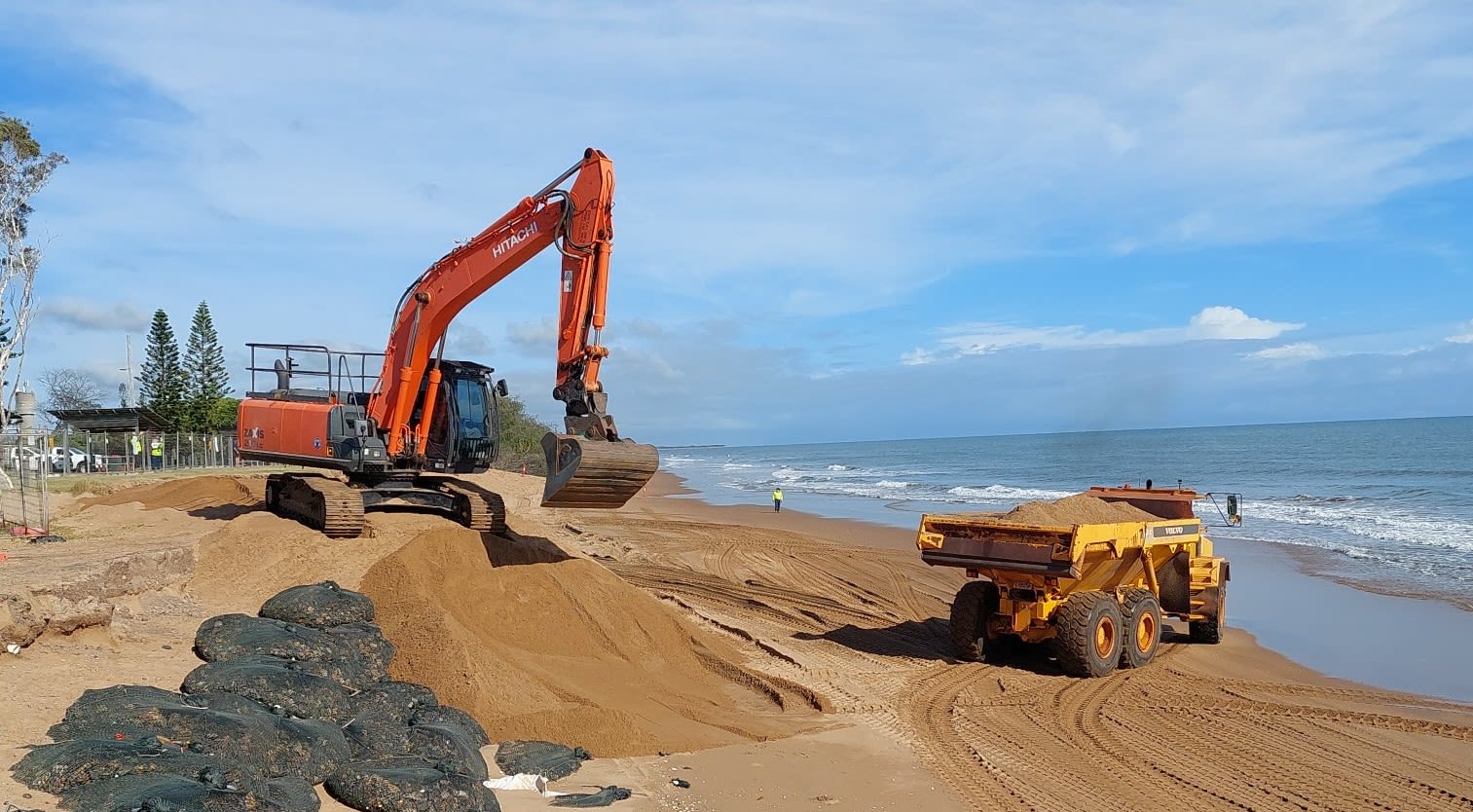
For the demolition works to continue in a safe an efficient manner a temporary sand buffer has been placed along this section of foreshore to allow a specialist contractor to remove the foundation.
All activities are being managed with turtle protection measures and environmental controls in place.
Council is asking residents and visitors to be aware of changing conditions, take extra care if visiting Moore Park Beach and follow on-site instructions while these works are carried out.



Long term solution

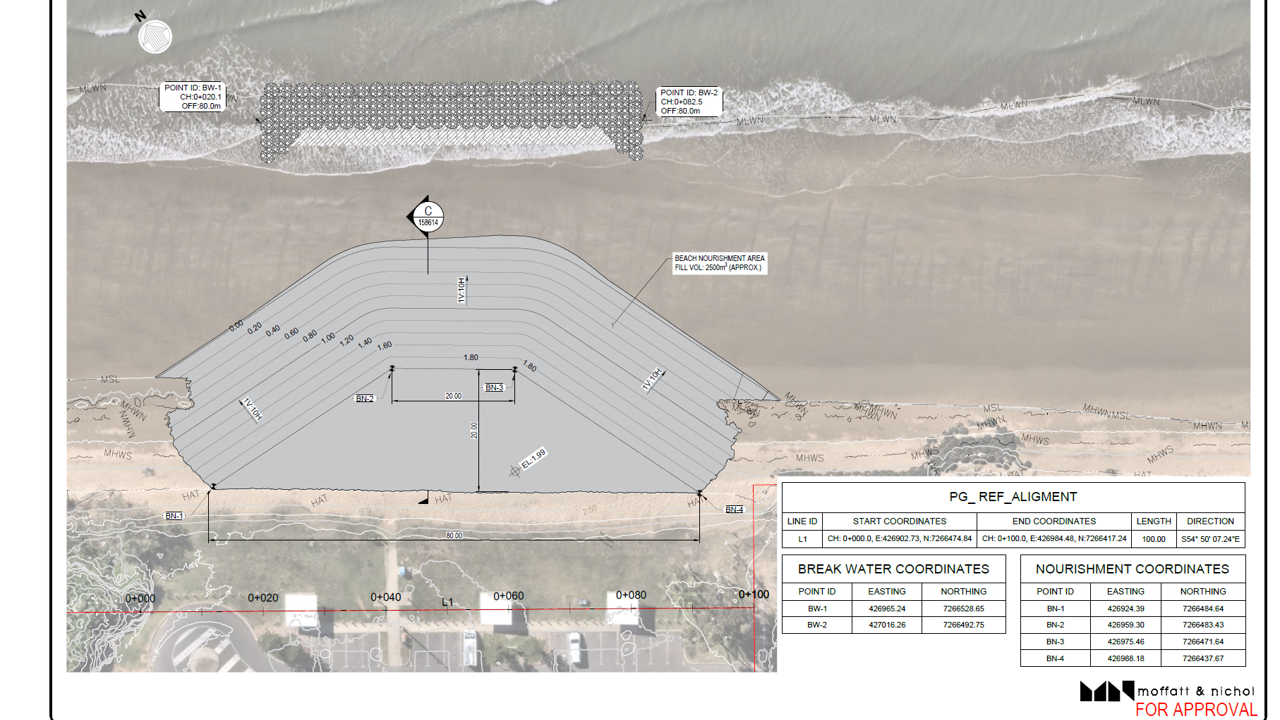
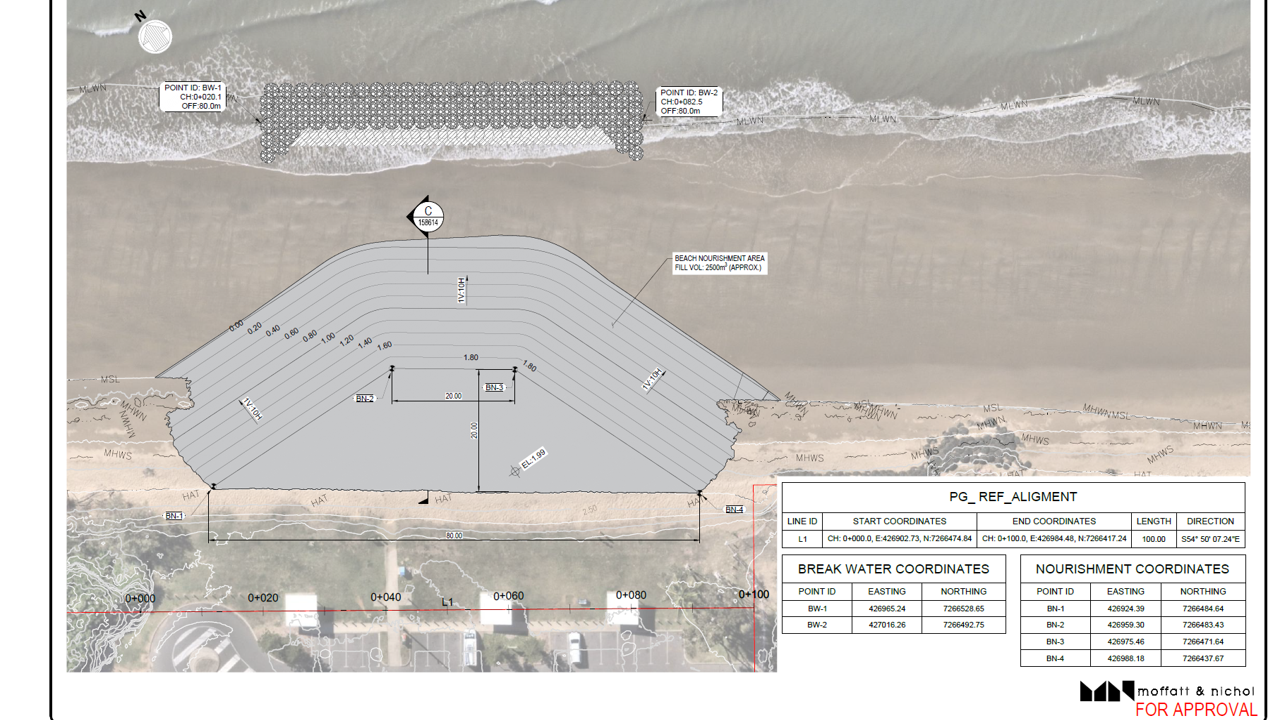
Working in conjunction with specialist coastal engineers, Council’s infrastructure and project teams are investigating an offshore breakwater as a long-term beach protection measure.
The solution would allow for the reuse of the one tonne rock bags that were placed in front of the former surf club as a temporary revetment.
Those bags would be joined by four tonne rock bags and be placed approximately 80 m out from the bank.
The offshore breakwater would be visible about 90% of the time but would become submerged at highest astronomical tide.
The purpose of the offshore breakwater is to dissipate the wave action before it reaches the vulnerable bank.
The proposal is currently under state department review.
If approved, an additional sand buffer would be placed along the bank after the breakwater is constructed.
Case studies from similar solutions constructed in southern states demonstrate that over time an offshore breakwater can result in greater sand retention.
Council is also awaiting the outcome of a funding application for the works.
It is intended that the solution would be trialled over two years under a monitoring program.
Pending the success of that trial period the offshore breakwater would become a permanent, long-term solution to protect the public infrastructure fronting Bob Nielsen Park.

Moore Park Beach: a jewel in our coastal crown

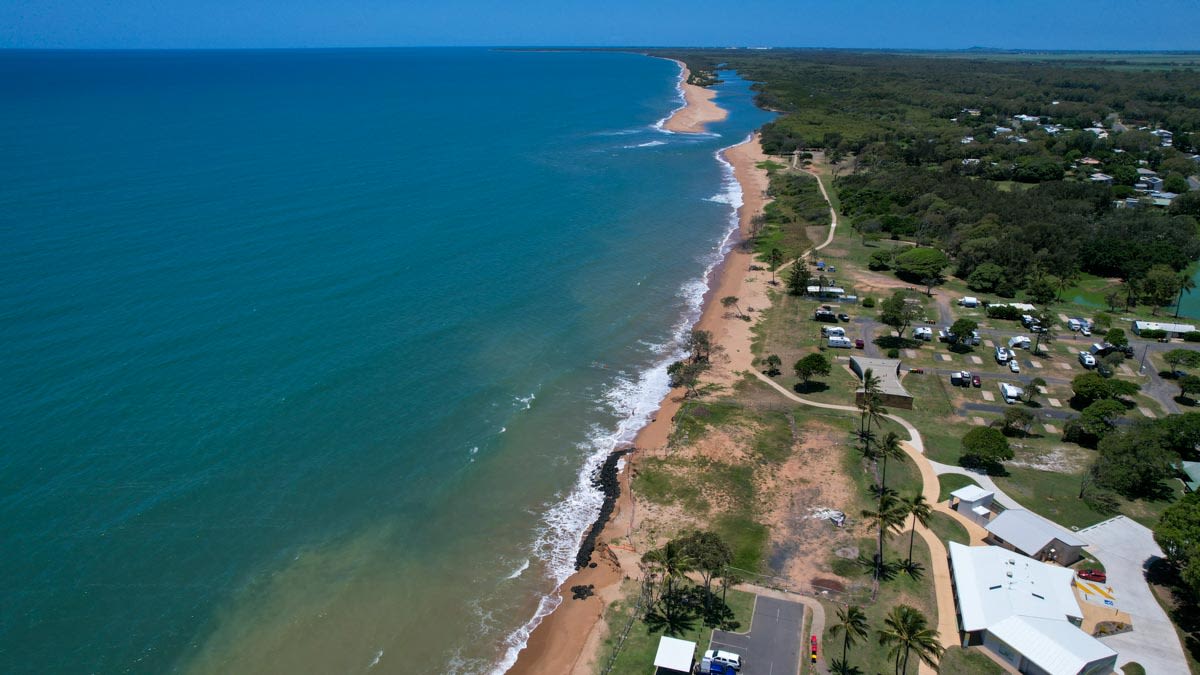
The sandy shores of Moore Park Beach stretch almost 20 km and is a popular swimming area with seasonal patrols.
It is a nesting site for sea turtles and the northern end of the beach allows four-wheel driving outside of turtle season.
In 2020 Bundaberg Regional Council unveiled a masterplan for the area which acknowledged its many attractions and highlighted its growing reputation as a sought after destination for residents and visitors alike.
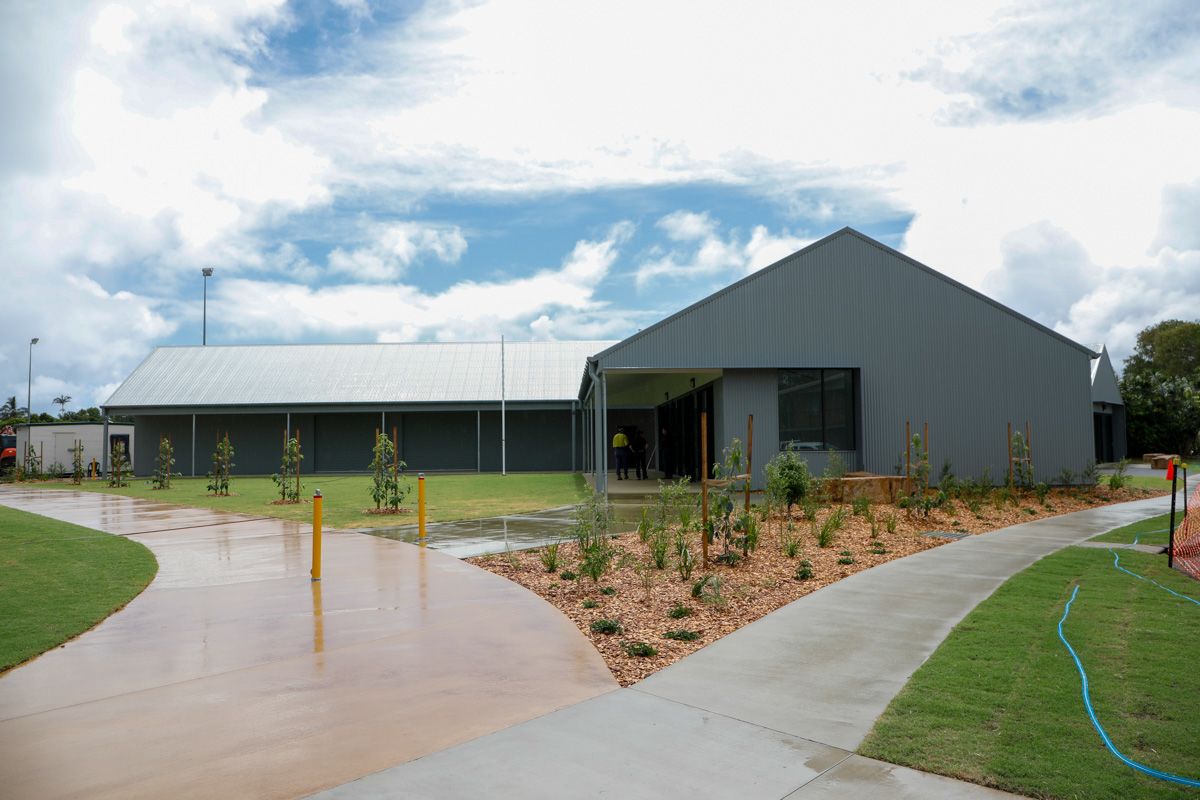
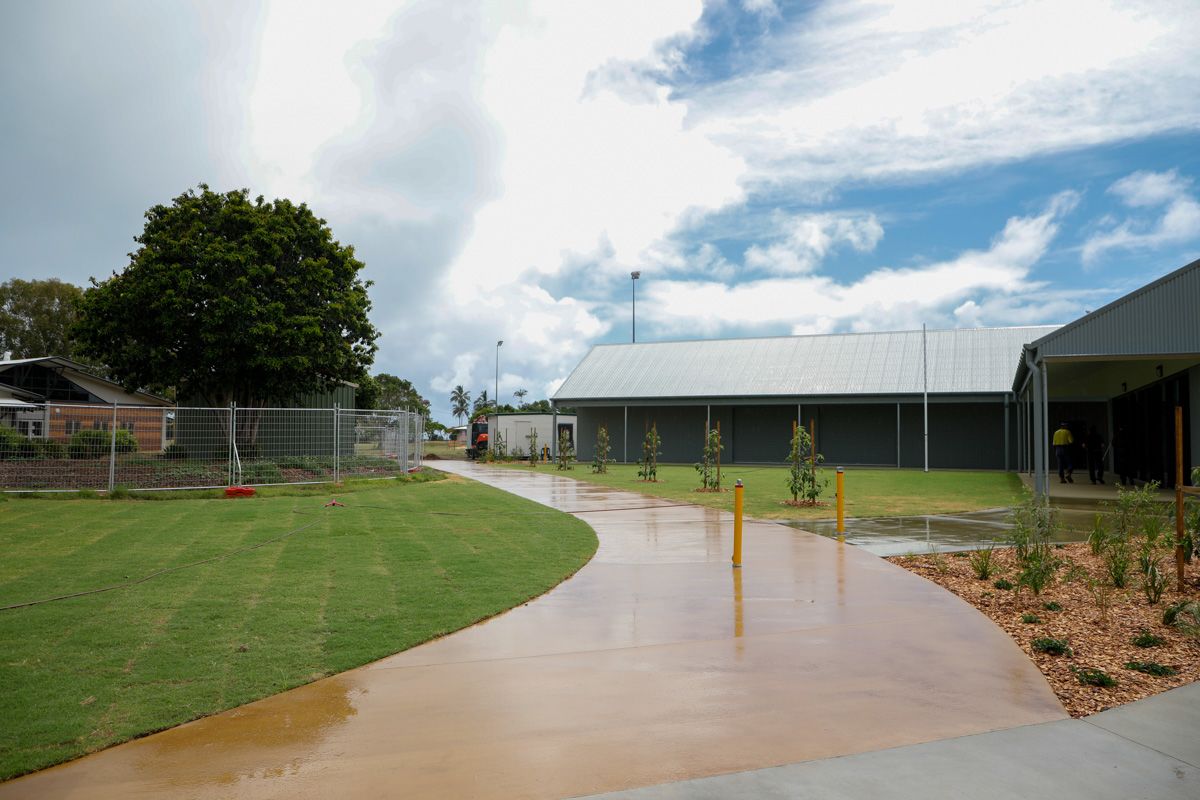
Significant investment has been made by Council to progress the initial stages of the masterplan which included the delivery of the Moore Park Beach Community Hub.
The modern, multi-functional facility was designed to help support the town’s growing population and is already home to groups including the local Men’s Shed, the Moore Park Beach Arts Inc. and the Moore Park Beach Association’s op shop known as ‘The Hub’.
The precinct’s features include significant landscape works, a new playground, irrigation of the sports oval, civil and electrical works, and a new sewer reticulation network and wastewater treatment plant.
Council supported the construction of the new Moore Park Surf Life Saving Club building by providing a sewer connection to the new facility as well as pedestrian pathways around the building and a new facility driveway and carpark.
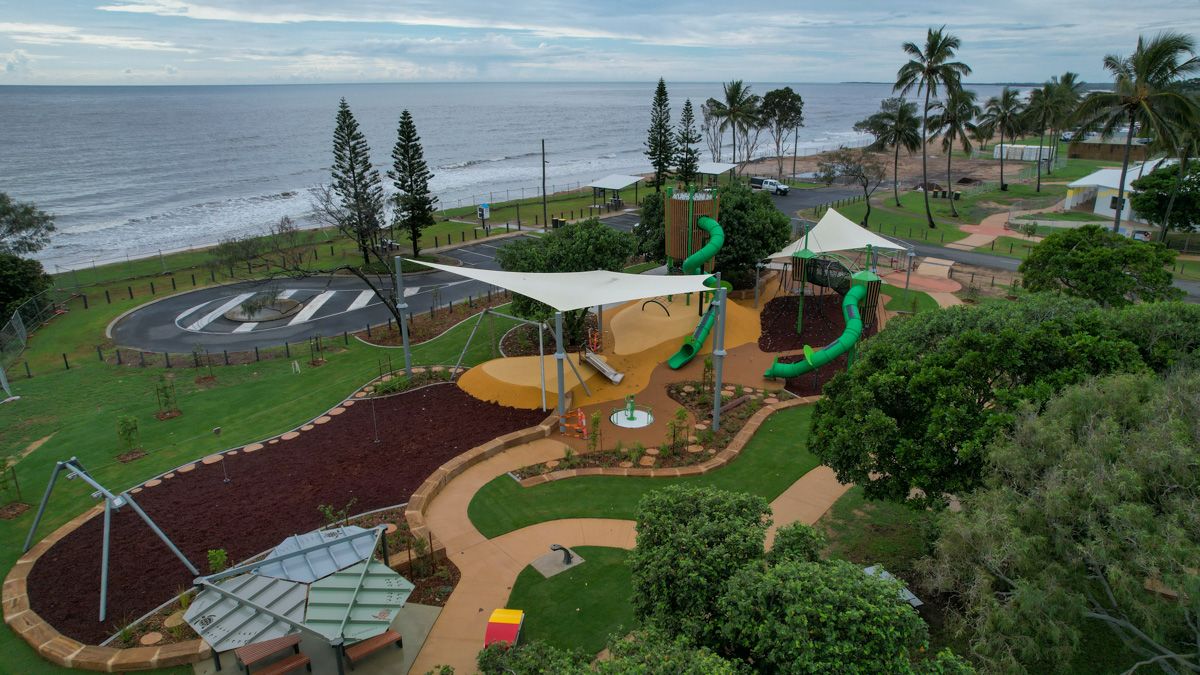
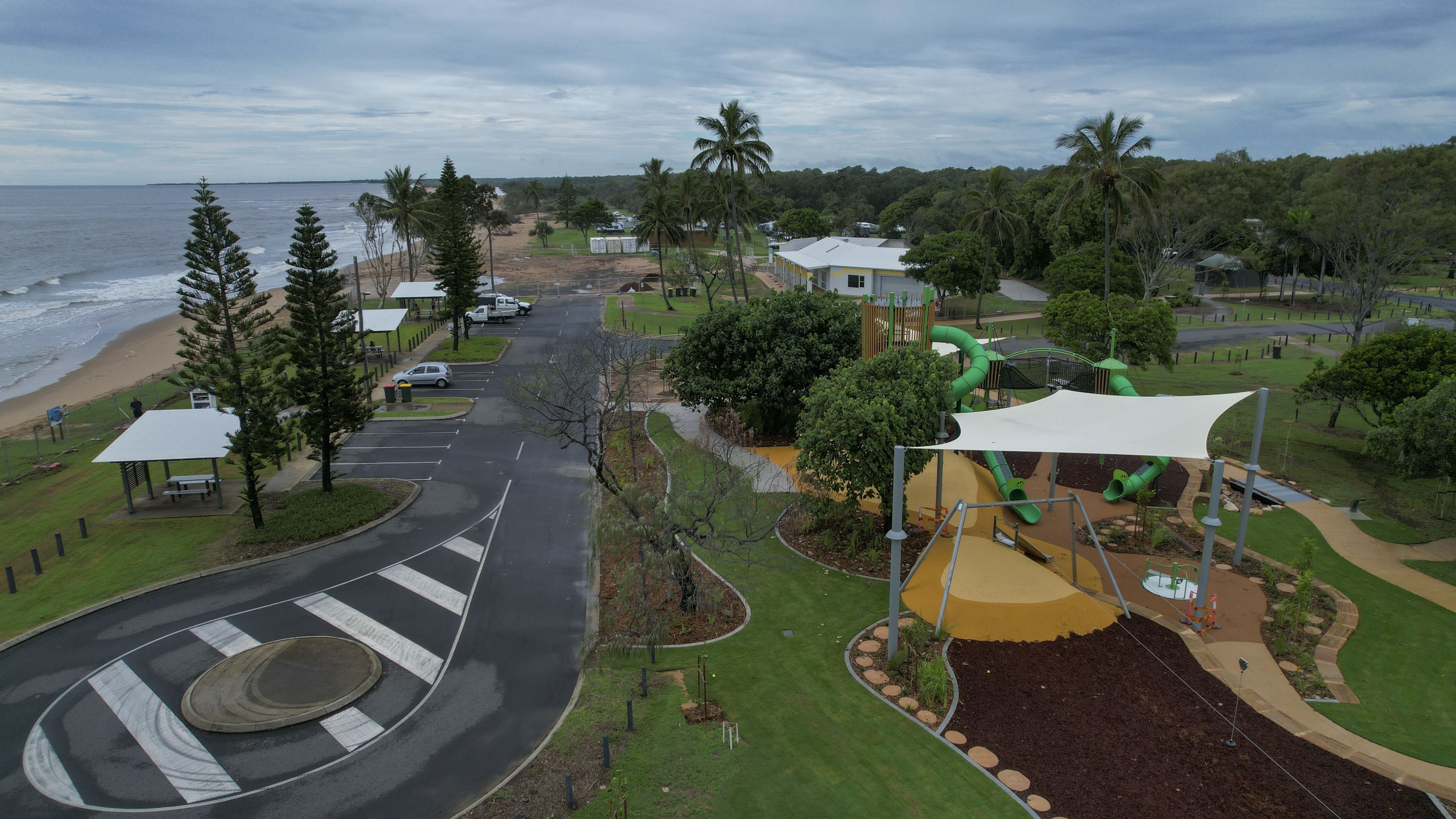
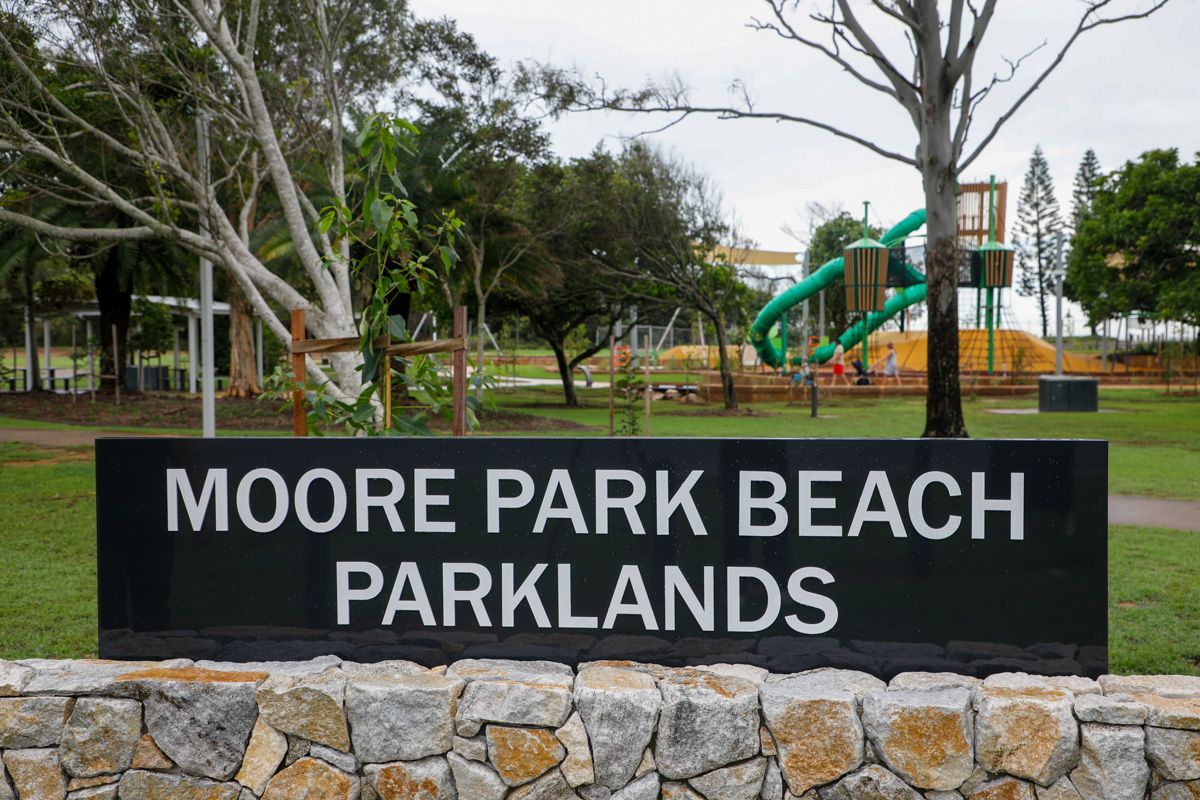
Revitalisation of the Moore Park Beach Parklands was the icing on the recreational cake for the coastal community.
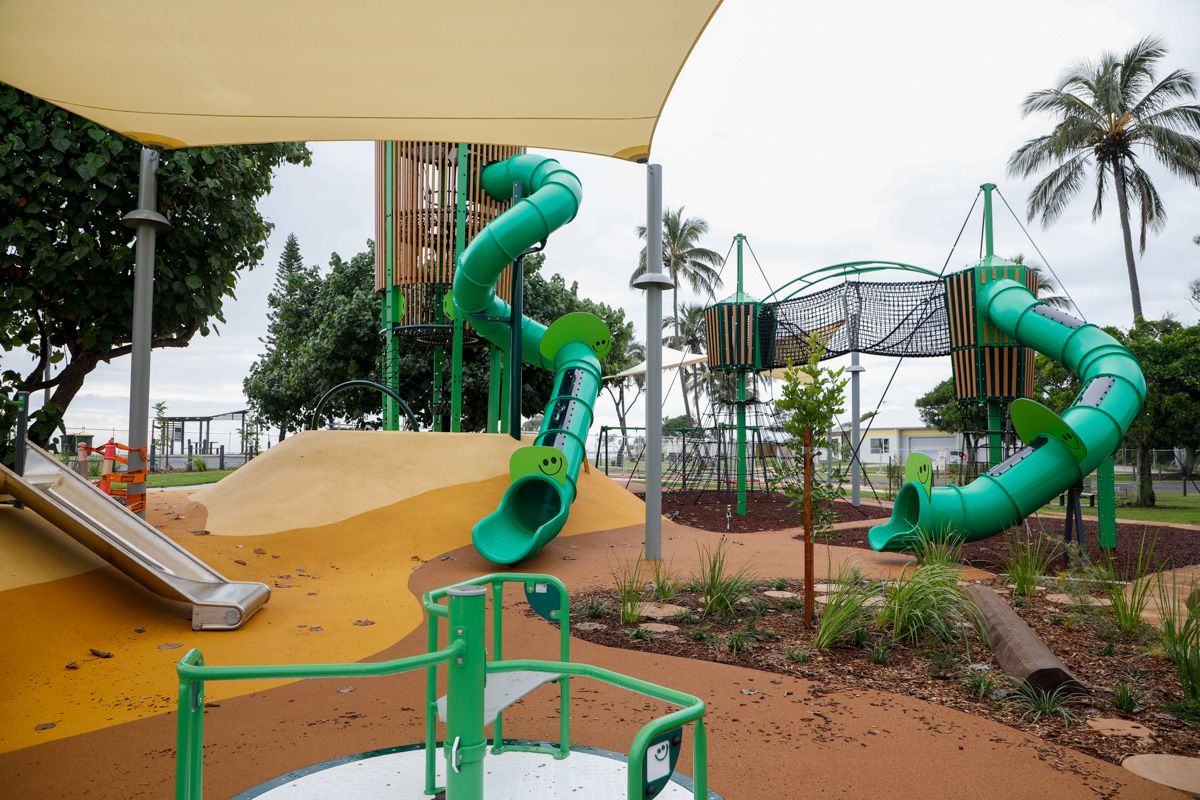
The newly landscaped area features an impressive and locally designed playground with an impressive 4.3 m high slide.
The playground features climbing frames, adventure activities, all abilities equipment and a large tower featuring the giant slide.
Shade sails and new seating have also been installed in the area.
The multi-million dollar investment demonstrates Council’s commitment to supporting the Moore Park Beach township and its bright future.



 Built with Shorthand