
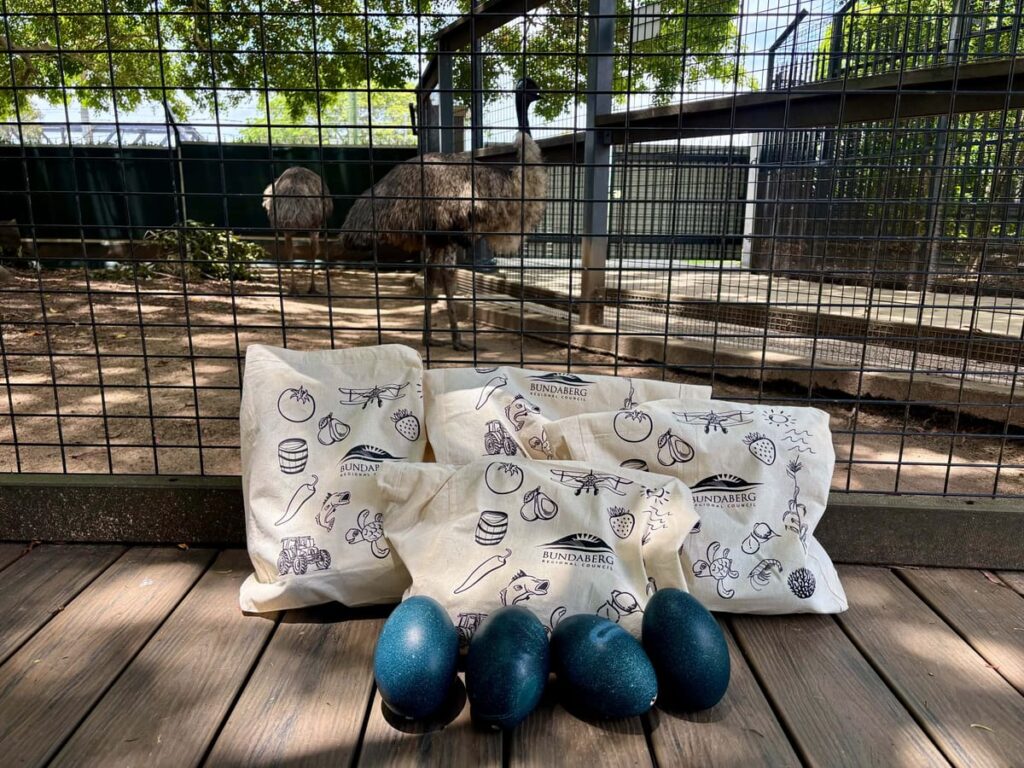
A record number of schools and community groups now have a rather unique educational tool after Alexandra Park Zoo donated more than 30 emu eggs this year.
Alexandra Park Zoo’s two resident emus Jimmy and Apple are both female meaning all eggs distributed through the program are unfertilised and will not hatch.
Laying eggs is a natural seasonal behaviour and a positive sign the birds are healthy and thriving.
Rather than going unused, the eggs are repurposed as valuable educational resources for schools and community groups across the region.
The eggs will be used in a range of educational, cultural and community projects, from science lessons and wildlife education to Aboriginal art and storytelling activities.
Participation has more than tripled since last year’s giveaway, reflecting growing interest in the unique program.
Mayor Helen Blackburn said the program was a meaningful way for the zoo to extend its impact beyond its gates.
“The emu egg giveaway is a great example of how Alexandra Park Zoo supports learning and community connections across our region,” Mayor Blackburn said.
“It’s fantastic to see demand for the program continue to grow, highlighting the community’s enthusiasm for unique, hands-on ways to connect with local wildlife, culture and the natural world.”
While every egg started its journey at Alexandra Park Zoo, each one is now set to hatch a different learning opportunity across the region.
Head of Science at Bundaberg North State High School James Peach said the egg would become a valuable resource for bringing science lessons to life.
“It will be a great opportunity for students to get up close to something they wouldn’t normally have the chance to see or investigate in a classroom,” James said.
“We’re hoping to use it as a teaching resource across a number of year levels, particularly when looking at animal adaptations, reproduction and biodiversity.
“It will give students the opportunity to compare an emu egg with more familiar bird eggs such as chicken eggs and explore the differences in size, structure and the features that help protect developing birds.”
Assistant Director of Kids & Co. Moore Park Beach Kristielle Burrage said the emu eggs would form part of a centre-wide learning experience for children of all ages.
“We want to create an opportunity for children to investigate the eggs, learn about emus, their habitats, behaviours and life cycles and develop a deeper appreciation for our native Australian animals,” Kristielle said.
“We also want to create opportunities for children to learn about First Nations knowledge and perspectives, particularly the deep connections between people, animals and Country.
“One thing we are particularly excited about is documenting the entire experience in a special photo book … creating something that can be shared with families and revisited by the children for years to come.”
Principal of Lowmead State School Lachlan Houlahan said the emu eggs would help students connect with native wildlife while exploring Aboriginal art and storytelling.
“We hope the experience deepens our students’ curiosity about the living world and their appreciation of Aboriginal art and storytelling,” Lachlan said.
“The students will examine photos of carved eggs and watch video tutorials showing how artists carve the shells before trying it themselves with their own designs.
“It’s already sparked conversations as we’ve watched videos of emus incubating their eggs and followed the chicks’ growth from hatching, revisiting our science learning about life cycles.”
To learn more about the emus and other animals at Alexandra Park Zoo, visit the website.
More about Alexandra Park Zoo
Alexandra Park Zoo was established in 1911 and is one of Queensland’s oldest continuously running zoological facilities.
It is located next to Alexandra Park at 33 Quay St, Bundaberg West.
The zoo is free to visit and is open Wednesday to Sunday – 9.30 am to 4.30 pm.
Visit the website for more information and to plan your visit.