


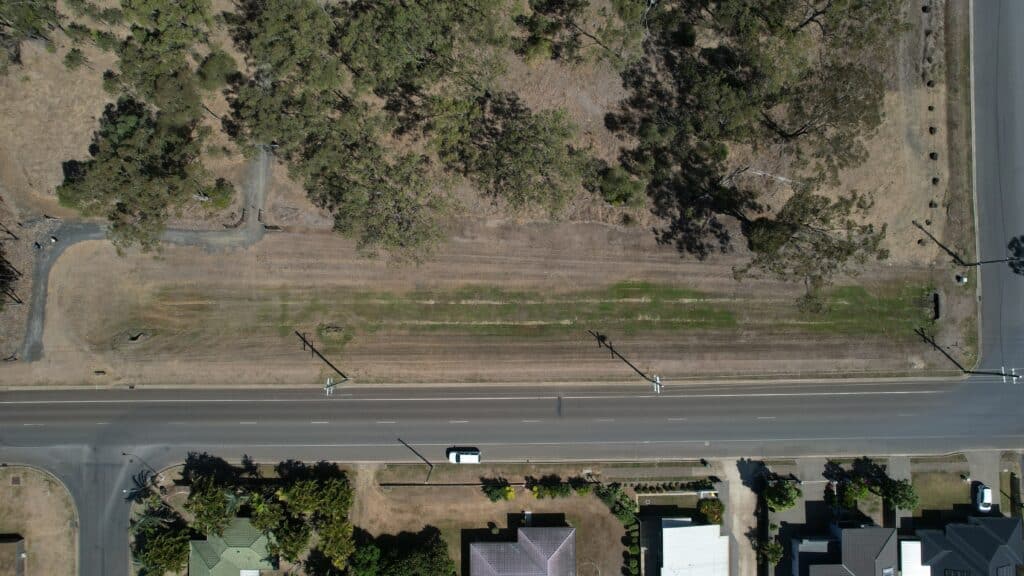
A once plain and challenging stormwater basin in Bundaberg will be brought to life with thousands of native plants, turning it into a cleaner, greener and lower-maintenance space.
The project is a trial by Bundaberg Regional Council to explore more cost-effective and sustainable ways of managing stormwater infrastructure.
The Telegraph Road detention basin is currently a flat, grassy area that requires regular mowing and often holds stagnant stormwater, making it difficult to maintain and creating ideal conditions for mosquitoes.
Roads and Infrastructure (urban) portfolio spokesperson and Reef Guardian representative Cr Larine Statham-Blair said the basin would be planted out with over 16,000 natives, transforming it into a natural landscape.
“This project aims to turn a piece of infrastructure that requires regular maintenance into a self-sustaining, low-maintenance environmental asset,” she said.
“It’s a smart, future-focused way of managing stormwater that also supports biodiversity, reduces costs and enhances community spaces.
“Over time, this basin will improve in both function and beauty, creating a more attractive and eco-friendly space.”
What are the benefits of the Telegraph Road detention basin project?
• Less maintenance – once established, the basin won’t need mowing which saves time and money.
• Cleaner water – the vegetation helps filter polluted stormwater before it flows into Baldwin Swamp.
• More wildlife – the plants create a home for birds, butterflies, and pollinators.
• Cooler neighbourhood – the trees will help cool the surrounding area.
• Climate-friendly – the plants will capture carbon and boost local climate resilience.
• Natural watering – stormwater will be reused to keep the plants growing.
Funding for this project has been provided by the Australian Government to support activities identified in Council’s Reef Action Plan.
Construction is scheduled to commence in late November and be completed by late December, followed by a six-month period to establish the new plantings.




How much is this costing 16,000 trees? In a drain!
Your wasting my Rates on this!
Put that money into fixing Victoria Street East Bundaberg after all the detour traffic was sent down there ripping up all the edges of the road!
Hi Michele, funding for this project has been provided by the Australian Government to support activities identified in Council’s Reef Action Plan.
Less maintenance – once established, the basin won’t need mowing which saves time and money.Thats the only reason, seeing as the council leader has slashed our slashers to one for the whole town. Fixing things that arent broken again i see.There are no problems whatsover in that area, but the government gets conned into thinking these projects are in dire need of help, so there you go have some money to save your slashing cost.
How about lower electricity bills as a benefit? Trees cooling also reduces power consumption of our air conditioning & fan usage.
Slowing storm water run off is important. The main component to flooding is fast run off that backs up when it exceeds the capacity of the river. This is caused by concrete & cement. What we need is our town to be more like a sponge & tree roots will help