

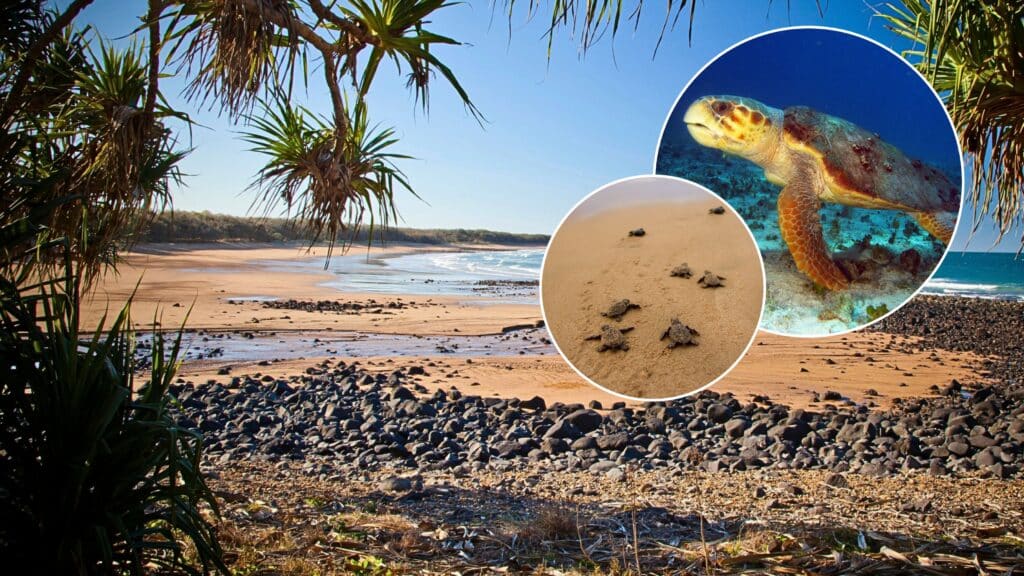
Residents and visitors are being encouraged to help protect marine turtles as they return to the region’s coastline for the nesting season.
Running from 1 November to 31 March, turtles will not only nest on local beaches but hatchlings will also get ready to make their first journey to the ocean.
During this time, Bundaberg Regional Council is reminding residents of the small actions that can be taken to make a big difference to their journey.
Mayor Helen Blackburn said from reducing light pollution to keeping dogs under control and giving nesting turtles plenty of space, everyone had a role to play in protecting these special marine visitors.
“Artificial lighting from homes, businesses, streets and parks can discourage female turtles from nesting and disorientate hatchlings as they emerge from their nests and make their way towards the sea,” she said.
“Residents and businesses near the coast are encouraged to help cut the glow by switching off unnecessary outdoor lights, closing curtains and blinds, and using motion-sensor lighting where possible.”
Beachgoers are also reminded to stay off the dunes, where turtles may be nesting and eggs can be buried beneath the sand.
Anyone who encounters a turtle on the beach should keep their distance, avoid disturbing it and contact the Woongarra Coast Turtle Volunteers hotline on 0491 140 198.
Other ways the community can help protect turtles this nesting season include:
- Keeping dogs on leads on beaches, except at designated off-leash beaches at Woodgate.
- Avoiding four-wheel driving on Moore Park Beach at night.
- Travelling slowly when boating along the coastline to reduce the risk of striking turtles.
- Reporting sick, injured, stranded or deceased turtles through the QWildlife app or by calling 1300 130 372.
Mayor Blackburn said Council was also taking action to help create a safer environment for marine turtles along the region’s coastline.
“Residents may notice some park lights along the coast being switched off or changed to motion-sensor activation after 8.30pm to help reduce unnecessary light pollution,” she said.
“Increased patrol efforts will also help raise awareness of dog regulations on beaches and encourage compliance, while Council continues to meet with and support community volunteer citizen science and wildlife rescue groups working to protect marine turtles.”
Council has further strengthened its commitment to marine turtle conservation by becoming an affiliate member of the Queensland Marine Turtle Network and recently sponsoring the 7th Australian Marine Turtle Symposium.
A new webpage has also been developed to provide residents and visitors with information about local turtle conservation, nesting season and practical ways to help protect these threatened marine animals.
Find out more here.