

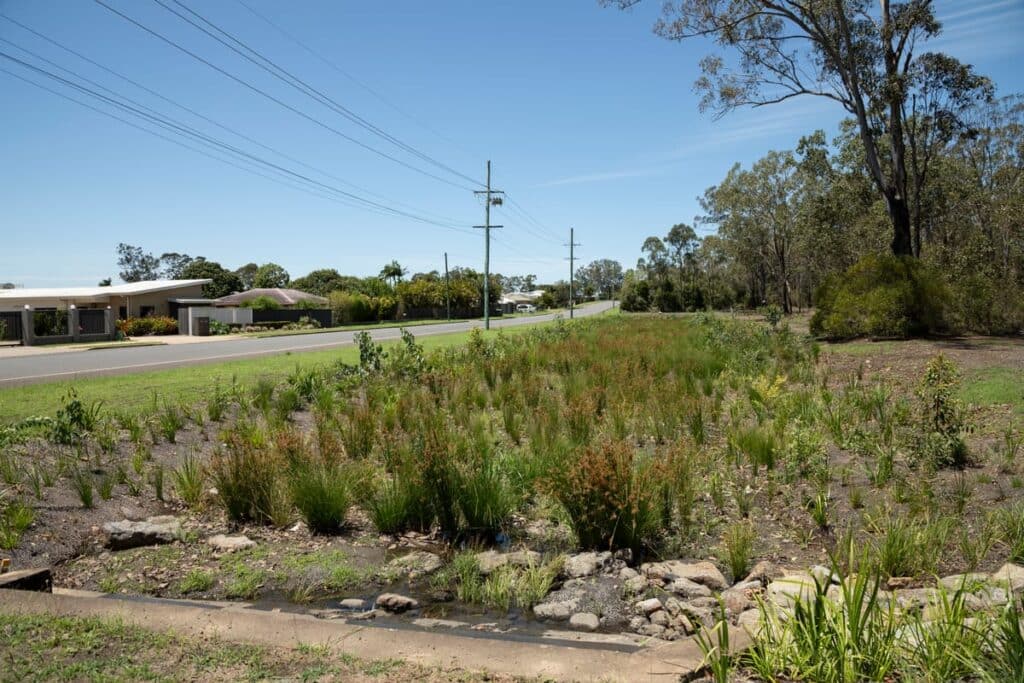
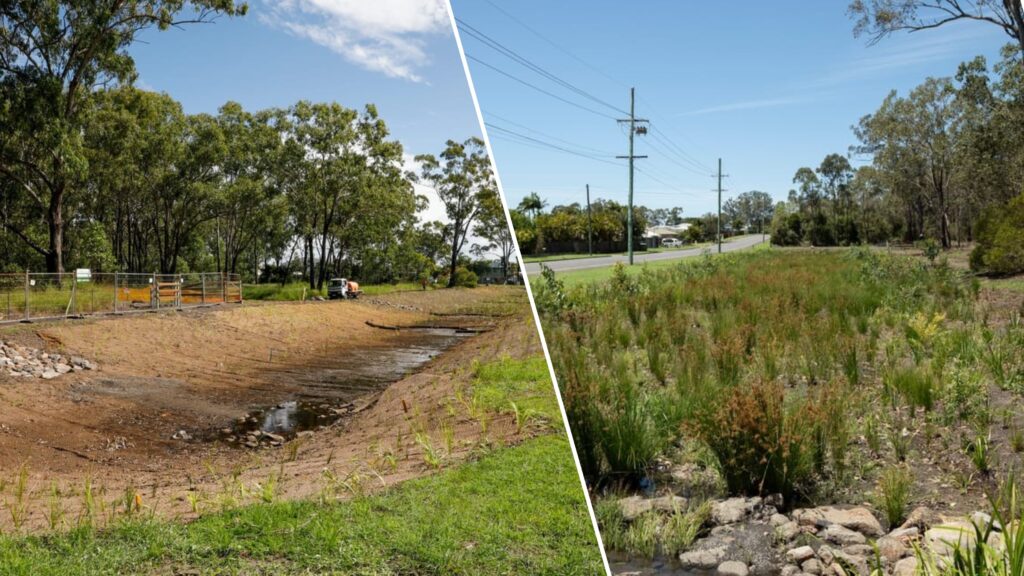
More than 16,000 native plants are thriving at the Telegraph Road Detention Basin, marking an important milestone in Bundaberg Regional Council’s trial to create a more sustainable, naturalised approach to stormwater management.
The Telegraph Road Detention Basin Naturalisation Project has successfully completed its initial six-month establishment period, with the newly planted vegetation showing strong growth and survival rates across the site.
The project is exploring how transforming traditional grassed detention basins into naturalised landscapes can improve stormwater treatment, support biodiversity and reduce ongoing maintenance requirements.
Mayor Helen Blackburn said the successful establishment of the vegetation was an encouraging step towards demonstrating the project’s long-term benefits.
“The plants have responded exceptionally well, with strong growth and survival rates observed across the site,” she said.
“It’s exciting to see the landscape beginning to take shape and demonstrate how natural solutions can help us get more from our existing stormwater infrastructure.”
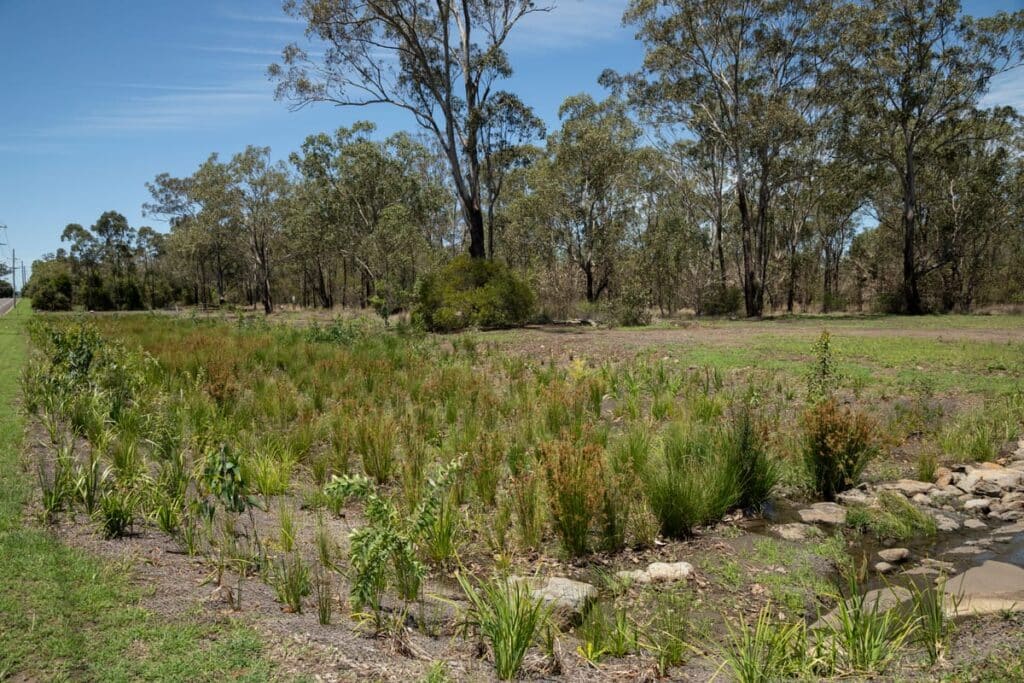
Early observations show stormwater is dispersing efficiently through the dense network of vegetation, allowing greater plant uptake and encouraging water to infiltrate into the ground.
This process helps the basin perform its important role in treating polluted stormwater before it reaches downstream receiving environments, including Baldwin Swamp.
The naturalised landscape has also demonstrated resilience through both extended dry and wet conditions, while the dense vegetation is already helping suppress weed growth across much of the site.
Another early benefit is a reduction in routine maintenance, with the basin no longer requiring regular mowing compared to its former grassed condition.
Mayor Blackburn said while there was still work ahead, the progress so far was promising,
“These early results are showing the potential for a stormwater asset to do much more than simply collect and manage water,” she said.
“By establishing a diverse native landscape, we are creating an opportunity to improve water quality, provide habitat and reduce the maintenance demands traditionally associated with these types of assets.”
What’s next?
With the initial establishment period complete, the project has now transitioned into an 18-month monitoring and maturation phase.
This next stage will focus on continued canopy development, vegetation health and strengthening the plants’ establishment to support the transition towards a largely self-sustaining landscape.
Funding for the project has been provided by the Australian Government to support activities identified in Council’s Reef Action Plan.