


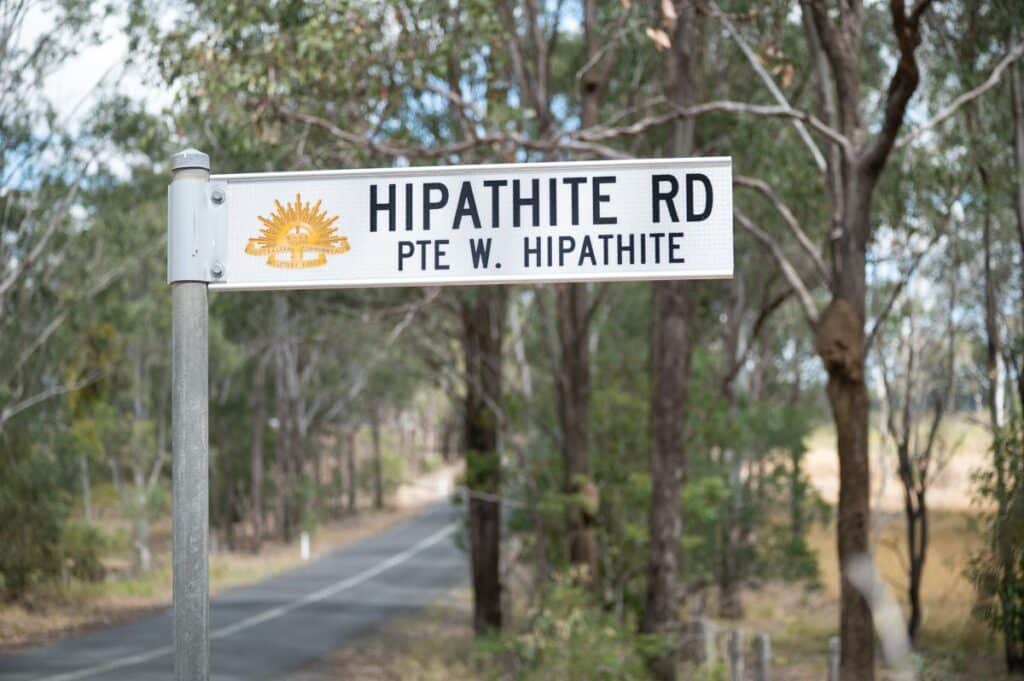
The World War I service of Private William Hipathite has been recognised on the rural road that was named in his honour.
Hipathite Road in Waterloo now displays the Rising Sun badge (third pattern) of the Australian Army as part of Bundaberg Regional Council’s Streets of Remembrance program.
Dairyman and crack shot
William Hipathite was born in Rickmansworth, Staffordshire England in 1866, to parents Alfred and Pheobe Hipathite.
The family moved to Queensland when William was about 8 years old and settled in the Samsonvale area where William went to Kobble Creek School.
He married Mary Alice Darling on 23 July 1892, and the couple went on to have seven children, George, Daisy, Elsie, Alfred William, Mary Alice, Phoebe and Clive.
William and Mary were dairy farmers in Yandaran and had lived in the area for around 20 years at the time of William’s enlistment for service in World War I.
William was Captain of the Yandaran Rifle Club for 10 years and was known to be one of the best shots in the district, having been selected for the Rifle Association’s Bisley Team and successful in competition shooting.
He enlisted in the Australian Imperial Force on 21 March 1916 after the maximum age for enlistment was raised from 38 to 45 years old in June 1915.
William’s age was listed as 43 years and 6 months on his enlistment papers, but his actual age was 49 or 50 years old.
Information provided to support the Streets of Remembrance application indicated his enlistment was accepted due to his expertise as a sharpshooter.
World War I Service
After enlisting in Brisbane, William embarked on HMAT A50 Itonus on 8 August 1916, arriving in Plymouth, England on 18 October.
He then proceeded on SS Arundel via Folkestone, England for France where he joined the Australian 15th Australian Infantry Battalion in Etaples on 16 January 1917.
William was wounded in action in the field on 11 April 1917 and returned to join the Battalion on 6 May.
He was again wounded in action on 11 June that same year, suffering shrapnel wounds to his chest and back.
He was admitted to No. 2 Australian General Hospital, with Red Cross notes from the time listing his condition as dangerously ill but also noting his demeanour as ‘comfortable and happy’.
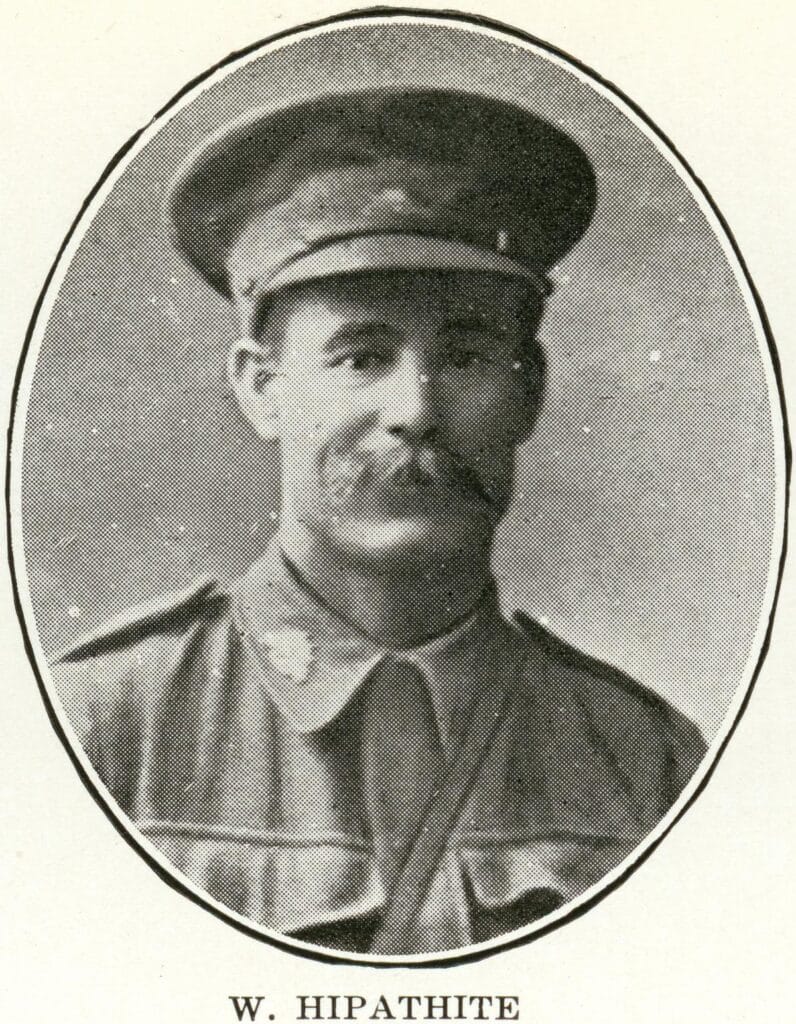
William died from his wounds on 30 June 1917, aged 51, and was buried in Wimmereux Communal Cemetery, Near Boulogne, France.
While at war, William wrote to his wife and kept a diary in which he recorded accounts of his experiences, some of which was transcribed for his Roll of Honour circular.
When in hospital he wrote postcards to his wife and children, writing to Mary:
“After having lived with you for 20 years I ever found you a true helpmate, a loving and faithful wife, a woman in whom there is no guile. I have the honour of being your loving husband.”
William received the British War Medal and Victory Medal, and his widow Mary was given a memorial scroll and memorial plaque.
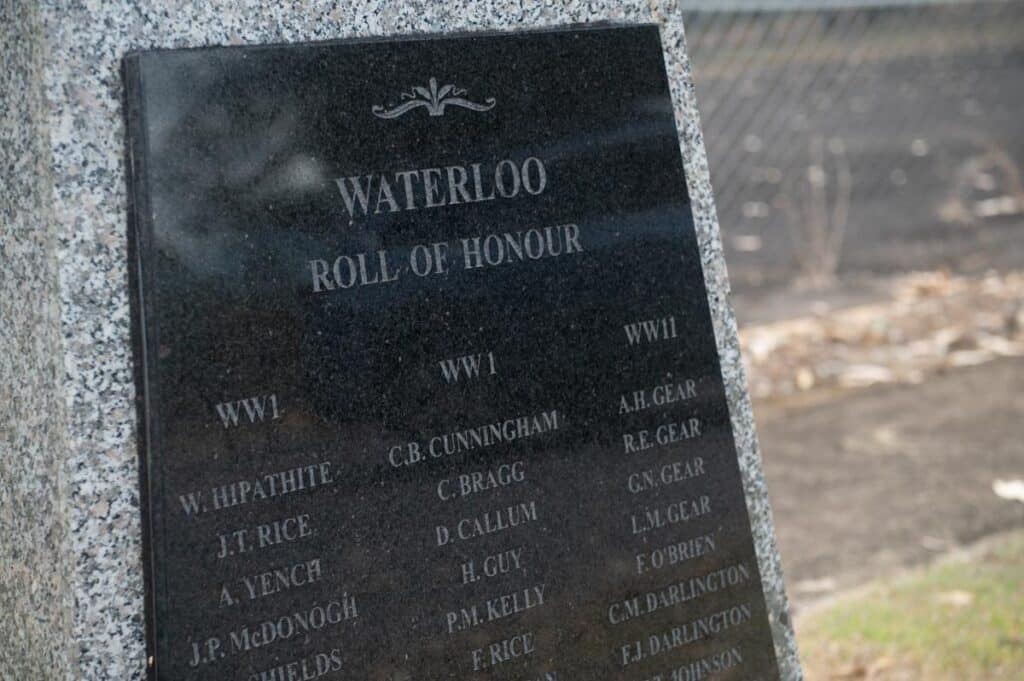
He is commemorated on the Australian War Memorial Roll of Honour, Bundaberg War Memorial, Miara, Waterloo and Yandaran Roll of Honour and the Waterloo Memorial Cairn Roll of Honour.
Service Number: 6033
Information about Private William Hipathite’s life and service is from the National Archives of Australia, Australian War Memorial, Virtual War Memorial and the Streets of Remembrance application.
Streets of Remembrance
Bundaberg Regional Council’s Streets of Remembrance program recognises the service of veterans with a connection to the Bundaberg Region by adding the badge of the military force in which they served to the street sign of streets named in their honour.
More information about Bundaberg Regional Council’s Streets of Remembrance program and how to nominate a street or service person is available here.



For information, Rickmansworth is in Hertfordshire, not Staffordshire.
RIP Pte. Hipathite
William Hipathites son, George, died on the 5 March 1916. That may have some bearing on his enlisting 16 days later